Automatic Blanking Machine Manufacturer - Advanced Cutting Solutions for Industrial Precision

+86-577-58918888
All Categories

automatic blanking machine manufacturer

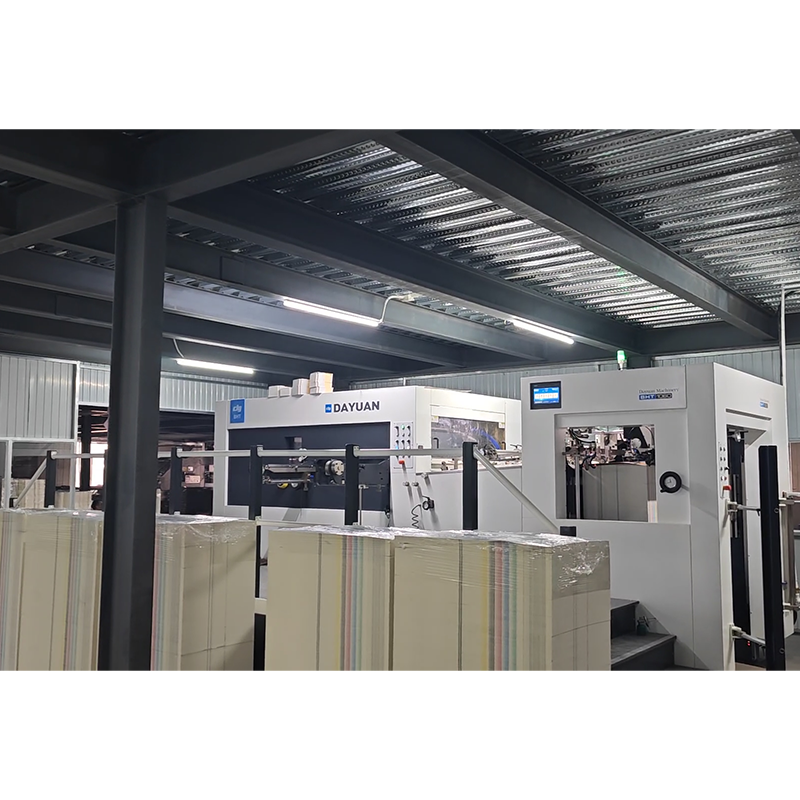
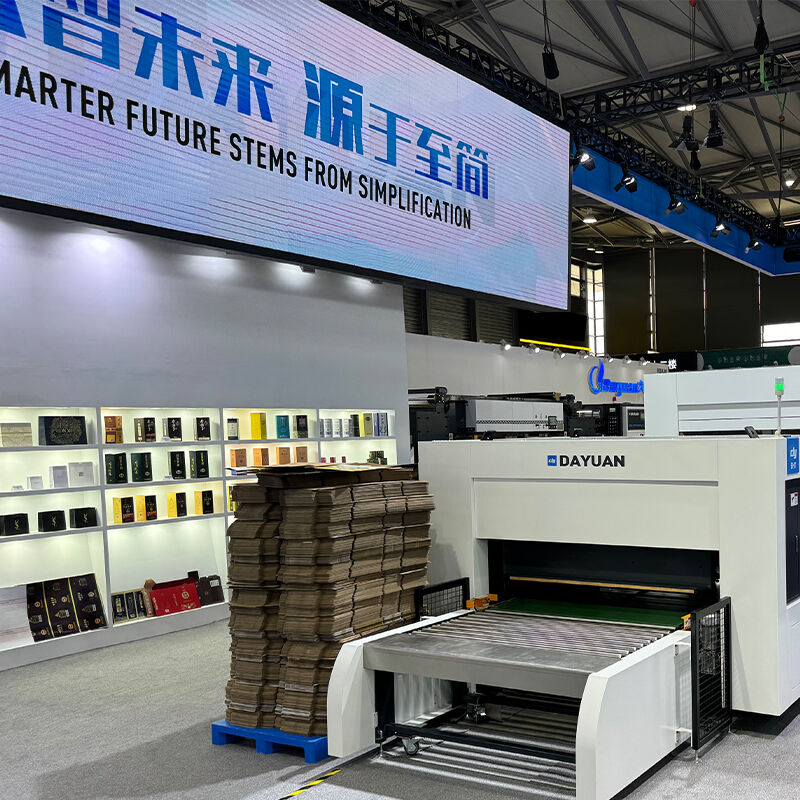
An automatic blanking machine manufacturer specializes in producing advanced industrial equipment designed to cut, punch, and shape various materials with precision and efficiency. These manufacturers develop sophisticated machines that serve industries ranging from automotive and aerospace to packaging and electronics. The primary function of equipment from an automatic blanking machine manufacturer involves transforming raw material sheets into specific shapes and sizes through automated cutting processes. Modern machines incorporate computer numerical control systems that enable operators to program complex cutting patterns with remarkable accuracy. The technological features embedded in these machines include servo-driven feeding mechanisms, hydraulic press systems, and intelligent monitoring capabilities that detect material positioning and adjust cutting parameters automatically. Safety features such as light curtains, emergency stop mechanisms, and protective enclosures ensure operator wellbeing during production cycles. These manufacturers integrate sensor technology that monitors blade wear, material thickness variations, and operational temperatures to maintain consistent output quality. The applications span multiple sectors where precise material cutting is essential. In automotive manufacturing, these machines produce gaskets, insulation components, and interior trim pieces. Packaging industries rely on them for creating cardboard boxes, foam inserts, and protective padding materials. Electronics manufacturers use them to cut circuit board substrates, insulation layers, and shielding components. Textile and leather industries benefit from their ability to cut intricate patterns for clothing, upholstery, and accessories. An automatic blanking machine manufacturer typically offers customization options to address specific production requirements, including varying table sizes, cutting force capacities, and automation levels. They provide comprehensive technical support, installation services, and operator training programs to ensure clients maximize their equipment investment. By partnering with a reputable automatic blanking machine manufacturer, businesses gain access to cutting-edge technology that enhances productivity while reducing material waste and labor costs.

New Product Releases

Choosing products from an established automatic blanking machine manufacturer delivers numerous practical benefits that directly impact your bottom line and operational efficiency. First and foremost, these machines dramatically increase production speed compared to manual cutting methods. What once took hours can now be completed in minutes, allowing your business to fulfill larger orders and meet tight deadlines consistently. The precision offered by equipment from a quality automatic blanking machine manufacturer eliminates human error, resulting in uniform parts that fit perfectly every time. This consistency reduces rejection rates and the costly need to reproduce defective components. Labor cost savings represent another significant advantage, as one operator can oversee multiple machines simultaneously, freeing your workforce to focus on higher-value tasks that require human judgment and creativity. Material waste reduction is a benefit that compounds over time, as computer-controlled cutting patterns optimize sheet usage and minimize scrap. Many businesses report waste reductions of thirty to fifty percent after implementing automated solutions. The repeatability factor ensures that whether you produce ten pieces or ten thousand, each item matches your specifications exactly. Flexibility is built into systems from a forward-thinking automatic blanking machine manufacturer, allowing quick changeovers between different products without extensive downtime or retooling expenses. Modern machines store multiple cutting programs digitally, enabling operators to switch between jobs with just a few button presses. Safety improvements protect your most valuable asset, your employees, by removing them from direct contact with dangerous cutting tools and reducing repetitive strain injuries associated with manual operations. Energy efficiency in newer models helps lower utility costs while supporting corporate sustainability initiatives. The data collection capabilities integrated into advanced equipment provide valuable insights into production metrics, helping you identify bottlenecks and optimization opportunities. Maintenance requirements are straightforward, with many components designed for easy access and replacement, minimizing downtime when service is needed. The return on investment typically materializes within eighteen to thirty-six months for most operations, after which the equipment continues generating value for years. Partnering with an experienced automatic blanking machine manufacturer also means accessing ongoing technical support, software updates, and industry expertise that keeps your operation competitive as market demands evolve. The scalability of these systems allows you to start with a single machine and expand your automated cutting capabilities as your business grows, protecting your initial investment while providing a clear path for future development.

Latest News

Why Does Regular Blade Maintenance and Calibration Matter for Your Paper Cutter Machine's Performance?

10

Feb

Why Does Regular Blade Maintenance and Calibration Matter for Your Paper Cutter Machine's Performance?

Industrial printing operations depend heavily on precision cutting equipment to maintain quality standards and operational efficiency. A well-maintained paper cutter machine represents the cornerstone of any successful commercial printing facility, w...
View More
What Key Maintenance Steps Ensure Consistent Performance in a High-Cycle Paper Die Cutting Machine?

10

Feb

What Key Maintenance Steps Ensure Consistent Performance in a High-Cycle Paper Die Cutting Machine?

Industrial packaging and printing operations rely heavily on the consistent performance of their paper die cutting machine systems to meet demanding production schedules. These sophisticated pieces of equipment process thousands of sheets per hour, c...
View More
What Maintenance Routines Extend the Lifespan of Your Industrial Paper Cutter Machine?

18

Mar

What Maintenance Routines Extend the Lifespan of Your Industrial Paper Cutter Machine?

Proper maintenance of an industrial paper cutter machine is crucial for maximizing operational efficiency and extending equipment lifespan in commercial printing environments. These sophisticated cutting systems require systematic care to maintain pr...
View More
How Do You Select the Right Paper Die Cutting Machine for Folding Cartons vs. Corrugated Board?

02

Apr

How Do You Select the Right Paper Die Cutting Machine for Folding Cartons vs. Corrugated Board?

Selecting the right paper die cutting machine for different packaging applications requires understanding the fundamental differences between folding carton and corrugated board production requirements. The choice between these substrate types direct...
View More

Get a Free Quote

Our representative will contact you soon.
Email
Name
Company Name
Required Product
Message
0/1000

automatic blanking machine manufacturer

Advanced Precision Engineering and Quality Control

Advanced Precision Engineering and Quality Control

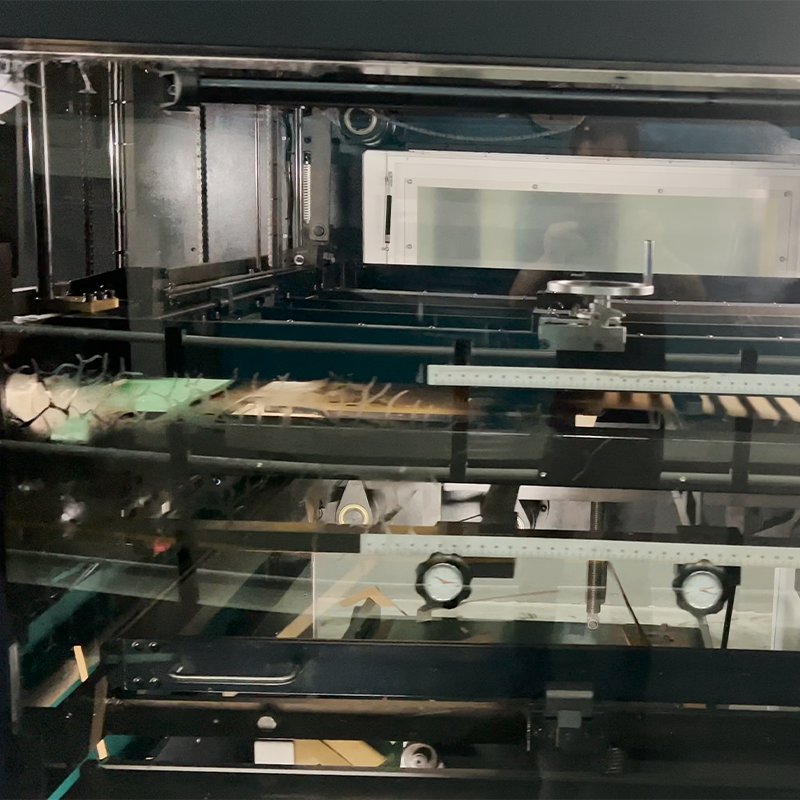
Equipment from a leading automatic blanking machine manufacturer incorporates precision engineering principles that fundamentally transform how manufacturers approach material cutting operations. The mechanical components are manufactured to extremely tight tolerances, ensuring that cutting blades align perfectly with material positioning systems throughout millions of operational cycles. This precision begins with the frame construction, where rigid steel structures prevent flexing and vibration that could compromise cut accuracy. Servo motors control material feeding with micrometer-level precision, advancing sheets to exact positions before each cutting stroke occurs. The cutting dies themselves are manufactured using hardened tool steels and undergo heat treatment processes that extend their operational life while maintaining sharp cutting edges. Position sensors continuously monitor blade location and material alignment, feeding real-time data to the control system that makes instantaneous adjustments to compensate for any detected variations. Quality control features integrated by a sophisticated automatic blanking machine manufacturer include vision systems that inspect cut edges for irregularities, measuring systems that verify dimensional accuracy against programmed specifications, and reject mechanisms that automatically remove non-conforming parts from the production stream. These quality assurance capabilities reduce the need for separate inspection processes, accelerating throughput while ensuring that only acceptable parts reach subsequent manufacturing stages or final customers. The control software developed by an innovative automatic blanking machine manufacturer provides intuitive interfaces that simplify programming complex cutting patterns, even for operators without extensive technical backgrounds. Graphical displays show material layouts, cutting paths, and waste areas, allowing users to visualize and optimize their production strategies before committing materials to actual cutting operations. Diagnostic capabilities alert maintenance personnel to potential issues before they cause failures, displaying specific component information and recommended corrective actions that minimize troubleshooting time. The precision delivered by these systems directly translates to reduced assembly problems in downstream operations, as consistently accurate components fit together properly without requiring manual adjustment or rework. This reliability strengthens customer relationships and enhances your company's reputation for delivering quality products on schedule.
Intelligent Automation and Production Efficiency

Intelligent Automation and Production Efficiency

The automation capabilities engineered by a progressive automatic blanking machine manufacturer revolutionize production workflows by eliminating manual intervention points that traditionally slowed operations and introduced variability. Material handling systems automatically load sheet stock from storage racks, position it precisely on the cutting table, and remove finished parts without requiring operator assistance for each cycle. This continuous operation capability means production continues during breaks and shift changes, maximizing equipment utilization rates. Robotic integration options offered by an advanced automatic blanking machine manufacturer enable seamless connection with upstream and downstream processes, creating fully automated production cells that transform raw materials into finished components with minimal human interaction. Stacking systems organize cut parts by type or size, preparing them for packaging or subsequent manufacturing operations without manual sorting labor. The programmable logic controllers governing machine operations execute complex sequences that coordinate multiple functions simultaneously, such as feeding material while the cutting die returns to its starting position, effectively overlapping operations that would occur sequentially in manual processes. Intelligent sensors detect material presence, thickness, and alignment, automatically adjusting processing parameters to accommodate variations in incoming stock without producing defective parts. Production data collected by equipment from a data-savvy automatic blanking machine manufacturer feeds into manufacturing execution systems and enterprise resource planning software, providing managers with real-time visibility into production status, efficiency metrics, and material consumption rates. This information enables proactive decision-making regarding scheduling, inventory management, and resource allocation. Predictive maintenance algorithms analyze operational data patterns to forecast when components will require service, allowing maintenance activities to be scheduled during planned downtime rather than occurring as disruptive emergency repairs. The automation sophistication reduces training requirements, as operators interact primarily with user-friendly touchscreen interfaces rather than needing deep mechanical knowledge. Recipe management functions store optimized settings for different products, ensuring that when production switches between items, the machine automatically configures itself with proven parameters that deliver quality results. These efficiency gains compound over time, creating competitive advantages that are difficult for operations relying on manual methods to match.

Versatile Material Compatibility and Application Range

Versatile Material Compatibility and Application Range

A comprehensive automatic blanking machine manufacturer designs equipment with versatile material handling capabilities that address diverse industry requirements and enable manufacturers to serve multiple market segments with a single investment. The machines successfully process materials ranging from delicate foams and fabrics to robust metals and rigid plastics, adapting cutting forces and speeds to match material characteristics. Foam materials used in packaging, insulation, and cushioning applications require gentle handling and sharp cutting edges to prevent compression or tearing, capabilities that a specialized automatic blanking machine manufacturer incorporates through adjustable pressure controls and precision blade geometries. Rubber and elastomeric materials benefit from specific blade angles and cutting speeds that prevent material stretching or edge distortion during the cutting process. Textile and leather materials, including natural and synthetic varieties, are accommodated through vacuum hold-down systems that maintain material flatness during cutting and prevent shifting that would compromise pattern accuracy. Paperboard and corrugated materials used in packaging industries are processed efficiently with cutting dies designed to handle varying thicknesses and flute orientations without crushing or damaging the material structure. Plastic sheets including polyethylene, polypropylene, and engineering thermoplastics are cut cleanly with temperature-controlled dies that prevent melting or edge fusion that would require secondary finishing operations. Thin metal sheets and foils used in electronics, automotive, and appliance manufacturing are handled by machines from a capable automatic blanking machine manufacturer equipped with hardened cutting tools and robust frame structures that withstand the forces required to shear metallic materials. Composite materials combining multiple layers of different substances are successfully processed through coordinated cutting actions that address each layer appropriately. The flexibility extends to accommodating various material dimensions, with adjustable tables and feeding systems that handle sheets from small sample sizes up to industrial-scale panels measuring several meters in length and width. Quick-change tooling systems enable operators to swap cutting dies rapidly when switching between materials or products, minimizing setup time and maximizing productive operation. This versatility allows businesses to respond quickly to changing market demands, accept diverse customer orders, and explore new product opportunities without requiring additional equipment investments. Companies working with a versatile automatic blanking machine manufacturer gain operational flexibility that protects their competitive position across economic cycles and industry shifts.

Get a Free Quote

Our representative will contact you soon.
Email
Name
Company Name
Required Product
Message
0/1000