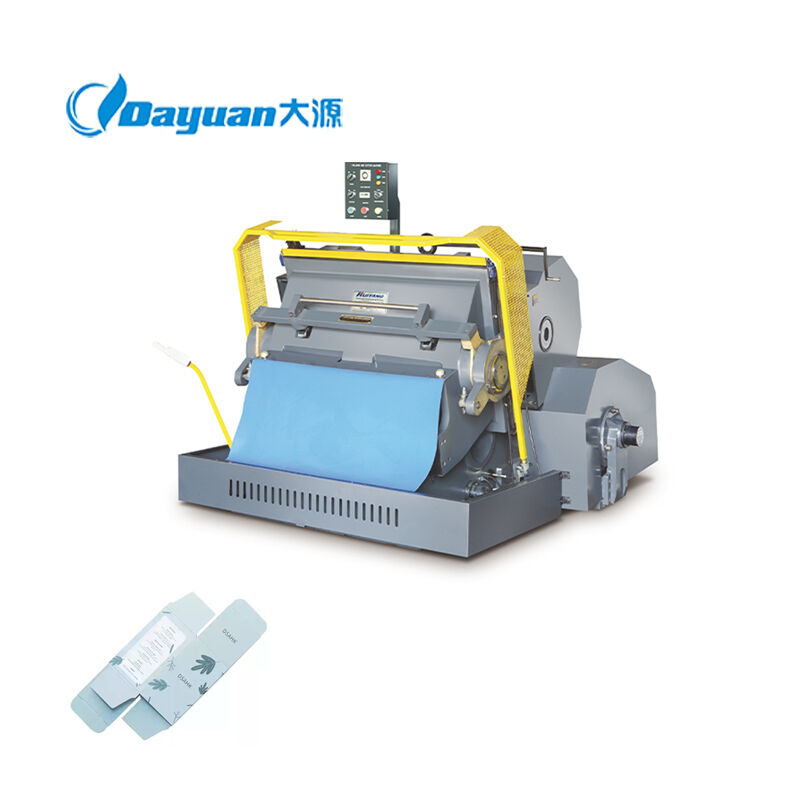
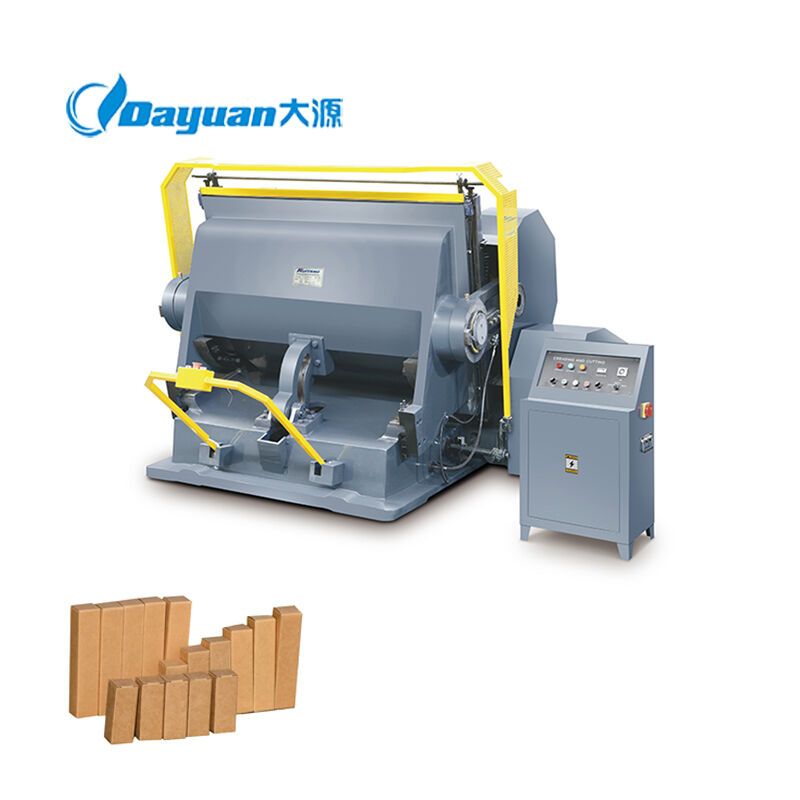
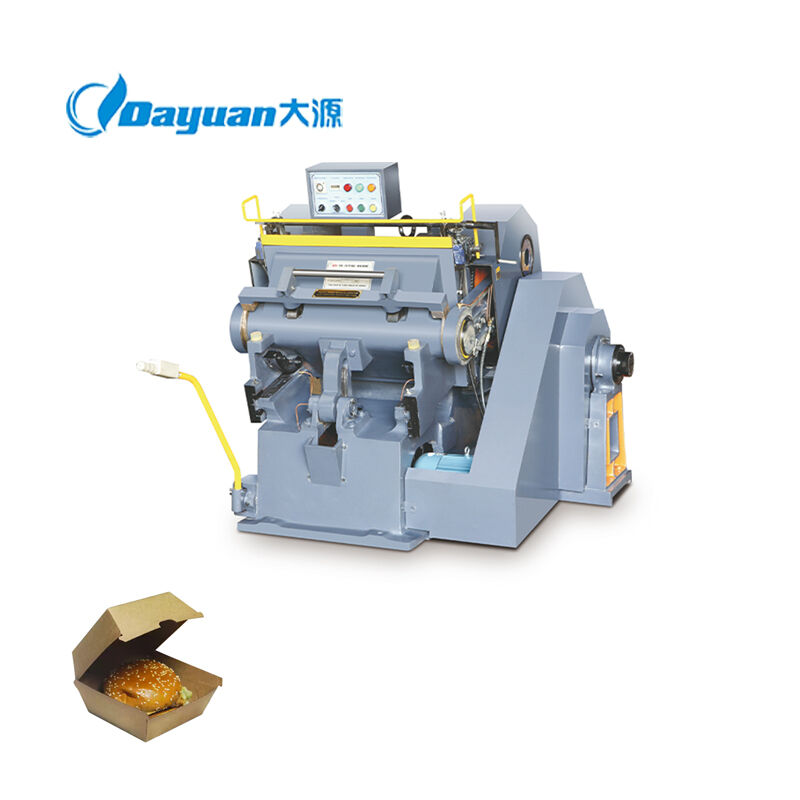
Manual Die Press Machine - Precision Cutting Equipment for Professional Results

+86-577-58918888
All Categories

manual die press machine

The manual die press machine represents a fundamental yet versatile piece of equipment designed for cutting, shaping, and forming various materials through controlled pressure application. This mechanical device operates through a straightforward hand-operated mechanism that converts physical force into precise cutting or embossing actions. At its core, the manual die press machine consists of a sturdy frame, a movable pressure plate, a stationary base plate, and a lever or handle system that generates the necessary force for processing materials. The primary function of this equipment centers on delivering consistent, repeatable results when working with leather, paper, fabric, rubber, gaskets, and thin metal sheets. The technological features of the manual die press machine include adjustable pressure settings, interchangeable die compatibility, and a robust construction that ensures stability during operation. Many models incorporate precision guides that maintain perfect alignment between the upper and lower plates, guaranteeing uniform pressure distribution across the entire cutting surface. The applications for this equipment span numerous industries and craft sectors. In leather working, artisans rely on the manual die press machine to cut intricate patterns and shapes with clean edges. The packaging industry utilizes these machines for creating custom gaskets and seals. Educational institutions employ them in teaching environments where students learn fundamental manufacturing principles. Small business owners appreciate how the manual die press machine enables prototype development and small-batch production without significant capital investment. The textile industry benefits from its ability to cut fabric samples and create appliques. Jewelry makers use specialized versions for shaping and forming metal components. The manual die press machine serves equally well in professional production settings and hobbyist workshops, offering a reliable solution for anyone requiring precise material cutting and forming capabilities without the complexity or expense of powered alternatives.

New Product Recommendations

The manual die press machine delivers exceptional value through numerous practical benefits that directly impact your production efficiency and bottom line. First and foremost, this equipment requires zero electricity consumption, which translates to ongoing operational cost savings and eliminates concerns about power availability in your workspace. You can position the machine anywhere convenient without worrying about electrical outlet locations or voltage requirements, providing complete flexibility in workshop layout and organization. The simplicity of the mechanical design means you face minimal maintenance requirements throughout the equipment's lifespan. Unlike powered hydraulic or pneumatic systems that demand regular fluid checks, seal replacements, and motor servicing, the manual die press machine needs only occasional lubrication and basic cleaning to maintain peak performance. This straightforward maintenance routine saves both time and money while reducing production downtime. The initial purchase price positions the manual die press machine as an accessible entry point for businesses and individuals who need professional cutting capabilities without major capital expenditure. This affordability extends to the entire ownership experience, as replacement parts cost significantly less than electronic components or hydraulic systems. You gain immediate hands-on control over every aspect of the pressing operation. The tactile feedback through the lever system allows you to feel exactly how much pressure applies to your material, enabling you to develop an intuitive understanding that prevents damage to delicate workpieces. This direct control proves invaluable when working with varying material thicknesses or experimenting with new applications. The compact footprint conserves valuable floor space in crowded workshops where every square foot matters. Most models occupy less area than a standard desk while still delivering impressive cutting force. The portability of smaller manual die press machines means you can transport equipment to different locations, whether moving between job sites, attending craft fairs, or demonstrating products at trade shows. Safety features inherent in the manual design provide peace of mind during operation. The controlled, deliberate action required to operate the lever prevents accidental activation and gives you complete command over timing. You can stop the pressing motion instantly if you notice any problem, unlike powered systems that may complete their cycle regardless. The versatility to accept different die sizes and styles transforms a single manual die press machine into a multifunctional tool that adapts to evolving business needs. As your product line expands or changes, you simply acquire new dies rather than purchasing entirely new equipment. This adaptability protects your investment over time and supports business growth without proportional increases in equipment costs. The absence of noise pollution creates a more pleasant working environment compared to air compressors or electric motors, allowing for comfortable conversation and reducing fatigue during extended production sessions.

Tips And Tricks

Why Is a Die Cutting Machine Essential for Consistent and Repeatable Paper Cutting Tasks?

15

Jan

Why Is a Die Cutting Machine Essential for Consistent and Repeatable Paper Cutting Tasks?

In the world of manufacturing and production, precision and repeatability are paramount for maintaining quality standards and operational efficiency. When it comes to paper processing applications, achieving consistent cuts across thousands or millio...
View More
What Key Maintenance Steps Ensure Consistent Performance in a High-Cycle Paper Die Cutting Machine?

10

Feb

What Key Maintenance Steps Ensure Consistent Performance in a High-Cycle Paper Die Cutting Machine?

Industrial packaging and printing operations rely heavily on the consistent performance of their paper die cutting machine systems to meet demanding production schedules. These sophisticated pieces of equipment process thousands of sheets per hour, c...
View More
How to Select the Right Paper Die Cutting Machine for Your Specific Cardboard or Carton Production?

10

Feb

How to Select the Right Paper Die Cutting Machine for Your Specific Cardboard or Carton Production?

Selecting the appropriate paper die cutting machine for cardboard and carton production requires careful consideration of multiple technical and operational factors. Modern packaging industries demand precision, efficiency, and versatility in their d...
View More
What Maintenance Routines Extend the Lifespan of Your Industrial Paper Cutter Machine?

18

Mar

What Maintenance Routines Extend the Lifespan of Your Industrial Paper Cutter Machine?

Proper maintenance of an industrial paper cutter machine is crucial for maximizing operational efficiency and extending equipment lifespan in commercial printing environments. These sophisticated cutting systems require systematic care to maintain pr...
View More

Get a Free Quote

Our representative will contact you soon.
Email
Name
Company Name
Required Product
Message
0/1000

manual die press machine

Exceptional Precision and Consistency for Professional Quality Results

Exceptional Precision and Consistency for Professional Quality Results

The manual die press machine excels at delivering remarkably precise cuts and forms that meet professional quality standards across diverse applications. This precision stems from the machine's fundamental mechanical design, which eliminates variables associated with electronic controls or fluctuating power sources. When you position your material and operate the lever, the same physical principles apply force identically every single time, creating a level of consistency that proves essential for maintaining product quality. The alignment system built into quality manual die press machines ensures the upper and lower plates meet perfectly parallel to each other throughout the entire pressing stroke. This parallel movement guarantees even pressure distribution across your entire die, preventing the common problems of incomplete cuts on one side or excessive pressure that damages material on the other. For businesses producing items that require exact specifications, this consistency translates directly into reduced waste and higher customer satisfaction. Consider a leather goods manufacturer creating wallet components where each piece must match precisely for proper assembly. The manual die press machine enables cutting dozens or hundreds of identical pieces with confidence that dimensional accuracy remains constant from the first cut to the last. This reliability eliminates the need for extensive quality control checking of every piece, streamlining production workflows and reducing labor costs. The precision capabilities extend beyond simple cutting to include embossing and forming operations where depth control matters significantly. Experienced operators develop a refined sense of how much lever force produces specific embossing depths, allowing for subtle variations when desired or perfect replication when consistency matters most. This tactile sensitivity cannot be replicated easily with automated systems that lack the nuanced feedback of direct mechanical operation. The mechanical advantage built into the lever system multiplies your input force efficiently, enabling you to generate substantial pressing pressure while maintaining fine control. This combination of power and precision opens possibilities for working with materials that resist cutting or forming, expanding your production capabilities without sacrificing the accuracy that defines professional results. Manufacturing facilities appreciate how the manual die press machine integrates into quality management systems through its predictable, repeatable performance that reduces variation in finished products.
Cost-Effective Solution That Maximizes Your Return on Investment

Cost-Effective Solution That Maximizes Your Return on Investment

Investing in a manual die press machine represents one of the most financially prudent decisions for businesses and individuals seeking professional material processing capabilities. The value proposition begins with the remarkably low initial purchase price compared to powered alternatives that deliver similar cutting force. This accessibility allows startups, small businesses, educational programs, and hobbyists to acquire professional-grade equipment without depleting capital reserves or requiring financing arrangements that create ongoing financial obligations. The true financial advantage extends far beyond the purchase price into the total cost of ownership throughout the equipment's operational life. Unlike hydraulic systems requiring regular fluid maintenance, seal replacements, and occasional pump repairs, or electric models needing motor servicing and potential electrical component replacements, the manual die press machine operates through simple mechanical principles that rarely fail. This reliability translates into minimal maintenance expenses, typically limited to occasional lubrication of pivot points and basic cleaning to remove material debris. The substantial cost savings continue accumulating through eliminated electricity consumption. In production environments running equipment for hours daily, electrical costs add up significantly over months and years. The manual die press machine operates entirely through human power, contributing zero to your utility bills while delivering the same cutting and forming results as powered alternatives. This energy independence also insulates your operation from electricity rate increases that erode profit margins over time. The durability inherent in quality manual die press machines ensures decades of productive service when properly maintained. Unlike electronic components that become obsolete or fail unpredictably, the robust steel construction and straightforward mechanical design create equipment that operates as effectively in year twenty as it did when new. This longevity amortizes the initial investment across enormous production volumes, reducing the per-unit cost of processing materials to negligible amounts. The versatility of the manual die press machine protects your investment as business needs evolve. Rather than discovering your equipment cannot accommodate new products or materials, you simply acquire appropriate dies and begin production immediately. This adaptability means a single machine purchase supports multiple product lines throughout its service life, eliminating the need for redundant equipment investments that tie up capital and consume workspace. For businesses evaluating equipment purchases through return on investment calculations, the manual die press machine typically achieves payback periods measured in months rather than years, particularly when compared against outsourcing cutting and forming operations to service providers who charge per piece or per hour.

User-Friendly Operation That Requires Minimal Training and Experience

User-Friendly Operation That Requires Minimal Training and Experience

The manual die press machine stands out for its remarkably intuitive operation that enables users to achieve professional results quickly, regardless of their prior experience with manufacturing equipment. This accessibility stems from the straightforward mechanical design that operates according to basic physical principles anyone can understand and master through brief hands-on practice. Unlike computer-controlled equipment requiring programming knowledge or hydraulic systems demanding understanding of fluid mechanics and pressure management, the manual die press machine responds directly and predictably to simple lever operation. New operators typically achieve competence within their first hour of use, progressing from initial supervised attempts to independent operation that produces quality results. This minimal learning curve delivers immediate value by eliminating lengthy training periods that delay production and consume supervisory resources. Small businesses particularly benefit from this simplicity when staff members need to share equipment responsibilities or when employee turnover requires training replacements quickly. The tactile nature of manual operation actually enhances skill development by providing direct sensory feedback that helps users understand material behavior and appropriate pressure application. Operators feel resistance through the lever as the die begins cutting, developing an intuitive sense of when sufficient force has been applied. This hands-on learning builds deeper understanding compared to simply pressing buttons on automated equipment, creating more capable workers who can troubleshoot problems and optimize processes independently. The absence of complex controls, digital displays, or programming interfaces eliminates common sources of confusion and operational errors. Users focus entirely on material positioning and lever operation without dividing attention among multiple variables or worrying about incorrect settings that might damage equipment or materials. This simplicity reduces mistakes that waste materials and create frustration, especially during the initial learning period when confidence remains fragile. Safety considerations also benefit from the straightforward operation of the manual die press machine. The deliberate, controlled action required to operate the lever gives users complete awareness of the pressing cycle, eliminating surprise activations or unexpected equipment behavior. This transparency builds confidence and allows operators to maintain focus on proper hand positioning and material handling throughout each cycle. The mechanical reliability of the manual die press machine means operators rarely encounter equipment malfunctions that disrupt workflow or require technical troubleshooting. When issues do arise, the visible, accessible components allow for straightforward diagnosis and resolution without requiring specialized technical knowledge or expensive service calls. This operational independence empowers users to maintain continuous productivity rather than waiting for repairs that halt production and create deadline pressures.

Get a Free Quote

Our representative will contact you soon.
Email
Name
Company Name
Required Product
Message
0/1000