 EN
EN

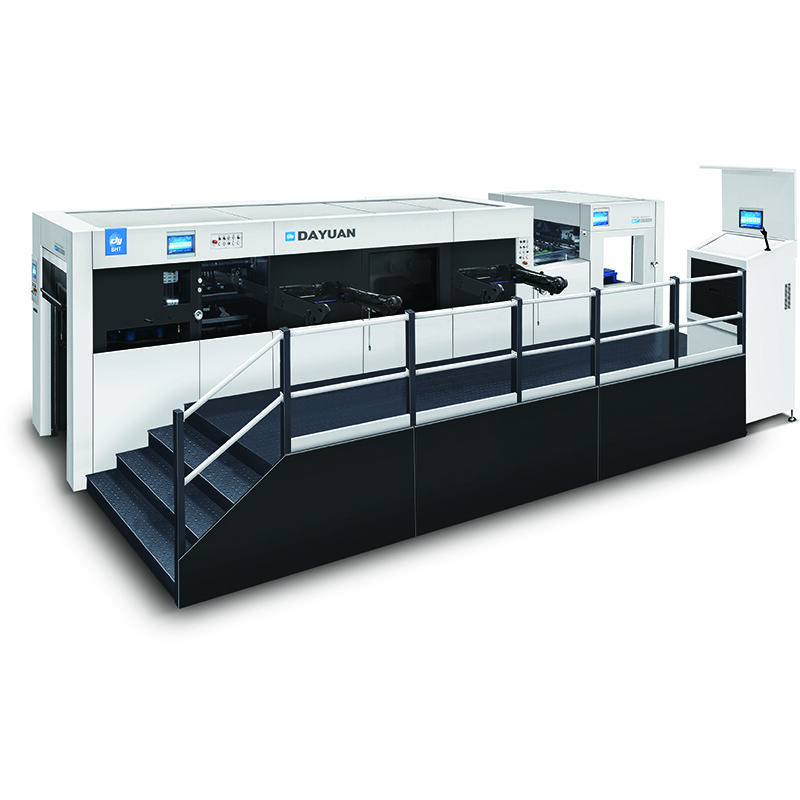
In the world of manufacturing and production, precision and repeatability are paramount for maintaining quality standards and operational efficiency. When it comes to paper processing applications, achieving consistent cuts across thousands or millions of pieces requires specialized equipment that can deliver unwavering accuracy. A die cutting machine represents the pinnacle of cutting technology, offering manufacturers the ability to produce identical shapes, patterns, and dimensions with remarkable consistency. This sophisticated equipment eliminates the variability inherent in manual cutting processes while dramatically increasing production speeds and reducing material waste.
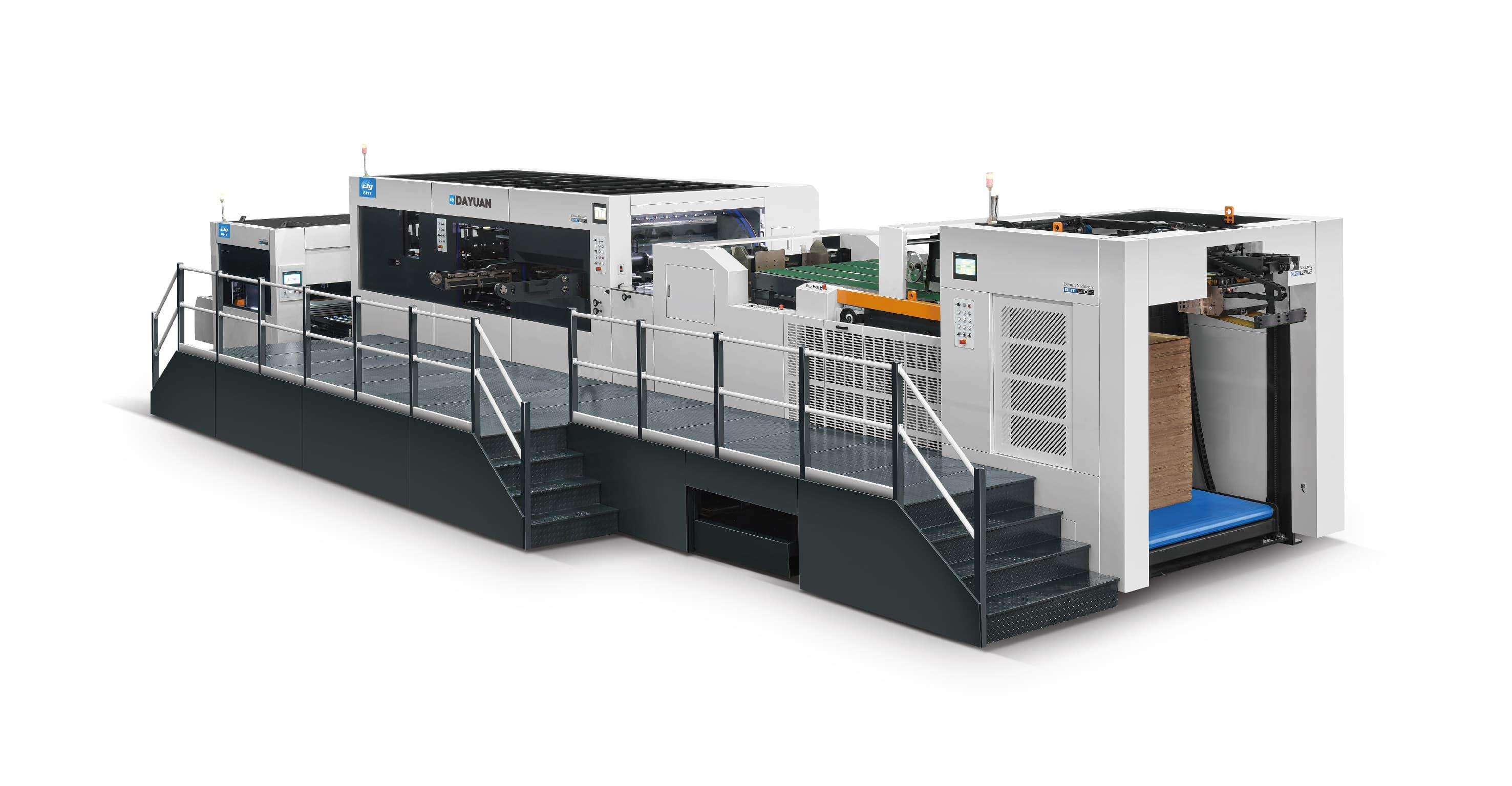
The importance of consistent cutting in paper-based manufacturing cannot be overstated. Industries ranging from packaging and labeling to automotive gaskets and electronics components rely on precise paper cutting to ensure proper fit, function, and aesthetic appeal. Traditional cutting methods often introduce variations that compound over large production runs, leading to quality issues, increased reject rates, and customer dissatisfaction. Modern die cutting machine technology addresses these challenges through engineered precision and automated control systems that maintain tight tolerances regardless of production volume.
Understanding Die Cutting Machine Technology
Mechanical Precision Engineering
The foundation of any effective die cutting machine lies in its mechanical precision engineering. These systems utilize steel rule dies or solid cutting tools manufactured to exact specifications, ensuring that each cut follows the predetermined path with minimal deviation. The machine's frame construction, typically featuring heavy-duty cast iron or steel components, provides the stability necessary to maintain cutting accuracy under the substantial forces generated during operation. Precision linear guides and ball screws translate commanded movements into exact positioning, while servo motors provide the controlled force application needed for consistent penetration through various paper materials.
Advanced die cutting machine designs incorporate multiple levels of precision control, from macro-positioning systems that ensure overall alignment to micro-adjustment mechanisms that fine-tune individual cutting elements. The integration of digital feedback systems allows real-time monitoring of cutting parameters, automatically compensating for variables such as material thickness variations, die wear, and environmental factors that could affect cutting consistency. This technological sophistication enables manufacturers to maintain cutting tolerances measured in fractions of millimeters across extended production runs.
Automated Control Systems
Modern die cutting machine control systems represent a significant advancement in manufacturing automation technology. Computer numerical control interfaces allow operators to program complex cutting patterns, material handling sequences, and quality control parameters through intuitive touchscreen displays. These systems store cutting programs in digital memory, ensuring that setup procedures can be replicated exactly for repeat orders. The elimination of manual setup variations dramatically improves consistency while reducing the skill level required for machine operation.
Integrated sensors throughout the die cutting machine continuously monitor critical parameters such as cutting force, material position, and die alignment. When deviations from programmed specifications are detected, the control system can automatically adjust operating parameters or alert operators to potential issues before quality problems occur. This predictive approach to quality control represents a fundamental shift from reactive inspection methods to proactive process management, resulting in significantly improved production consistency and reduced waste rates.
Benefits of Repeatability in Paper Cutting Operations
Quality Consistency Advantages
The primary advantage of using a die cutting machine for paper cutting operations is the exceptional quality consistency it delivers across all production units. Unlike manual cutting methods or less sophisticated equipment, a properly calibrated die cutting machine produces virtually identical results regardless of operator skill level or production timing. This consistency translates directly into improved product quality, reduced customer complaints, and enhanced brand reputation in competitive markets where precision manufacturing is a key differentiator.
Quality consistency extends beyond dimensional accuracy to include edge finish quality, cutting force distribution, and material handling precision. A die cutting machine applies uniform pressure across the entire cutting perimeter, eliminating the variations in edge quality that often result from inconsistent manual pressure application. The controlled cutting environment also minimizes material distortion during the cutting process, ensuring that finished parts maintain their intended shape and dimensional stability throughout subsequent manufacturing or assembly operations.
Production Efficiency Gains
The repeatability inherent in die cutting machine operations delivers substantial production efficiency gains through multiple mechanisms. Consistent cutting eliminates the need for extensive quality inspection and sorting operations, as operators can rely on the machine's precision to produce acceptable parts. This reduction in quality control overhead allows production resources to be redirected toward value-added activities, improving overall manufacturing productivity and reducing per-unit production costs.
Additionally, the predictable nature of die cutting machine operations enables more accurate production planning and scheduling. Manufacturing managers can calculate precise production rates, material consumption, and labor requirements based on established machine capabilities rather than estimating based on variable manual processes. This improved predictability facilitates better inventory management, reduced work-in-process levels, and more reliable customer delivery commitments, all of which contribute to enhanced operational efficiency and customer satisfaction.
Material Handling and Feed Systems
Precision Material Positioning
Effective die cutting machine operation requires sophisticated material handling systems that position paper stock with exceptional accuracy before each cutting cycle. Modern systems utilize precision grippers, vacuum hold-downs, and optical positioning sensors to ensure that each sheet or continuous web maintains exact alignment relative to the cutting dies. These positioning systems must account for material characteristics such as thickness variations, surface texture, and dimensional stability to achieve consistent cutting results across diverse paper grades and compositions.
The integration of servo-controlled feed mechanisms allows die cutting machine operators to program precise material advance distances, ensuring that successive cuts maintain exact spacing relationships. This capability is particularly critical for applications requiring multiple cuts per sheet or continuous web processing, where positioning errors can compound quickly if not properly controlled. Advanced feed systems also incorporate tension control mechanisms that maintain consistent material flatness during the cutting process, preventing wrinkles or distortions that could affect cutting accuracy.
Automated Material Loading
High-volume die cutting machine installations increasingly incorporate automated material loading systems that eliminate manual handling variations while improving production throughput. These systems utilize robotics, conveyor networks, and automated storage and retrieval mechanisms to present materials to the cutting station with consistent timing and positioning. The reduction in manual material handling not only improves consistency but also enhances operator safety by minimizing exposure to cutting areas and heavy lifting requirements.
Automated loading systems can be programmed to accommodate various material sizes, thicknesses, and surface treatments without requiring extensive manual reconfiguration between production runs. This flexibility enables manufacturers to maintain high levels of productivity while processing diverse product mixes, responding quickly to changing customer requirements without sacrificing cutting consistency. The integration of material identification systems ensures that the correct cutting programs are automatically selected based on the specific material being processed, further reducing the potential for human error in production setup.
Die Design and Manufacturing Considerations
Precision Die Construction
The cutting dies used in die cutting machine applications represent critical components that directly influence the consistency and quality of finished products. Professional die construction utilizes precision-ground steel rule or solid carbide cutting edges manufactured to tolerances measured in thousandths of an inch. The die base materials, typically high-quality plywood or specialized composites, provide the dimensional stability necessary to maintain cutting geometry over extended production runs. Proper die construction also incorporates features such as ejection systems, scrap removal mechanisms, and alignment guides that ensure consistent operation throughout the die's service life.
Advanced die cutting machine applications may utilize progressive dies that perform multiple cutting operations in sequence, requiring exceptional precision in die alignment and timing. These complex tooling systems demand sophisticated manufacturing techniques and quality control procedures to ensure that all cutting elements work in perfect coordination. The investment in precision die construction pays dividends through improved cutting consistency, extended die life, and reduced maintenance requirements, ultimately contributing to lower per-unit production costs and improved product quality.
Die Maintenance and Longevity
Maintaining cutting die sharpness and dimensional accuracy is essential for preserving the consistency advantages of die cutting machine operations. Regular die inspection and maintenance programs identify wear patterns, edge damage, and dimensional changes before they significantly impact cutting quality. Professional die maintenance services utilize precision grinding equipment and measurement systems to restore cutting edges to original specifications, extending die service life while maintaining cutting consistency throughout the die's operational period.
The economic benefits of proper die maintenance extend beyond direct tooling costs to include reduced machine downtime, improved product quality, and decreased material waste. A well-maintained die cutting machine installation with properly serviced tooling can maintain consistent cutting quality for millions of cycles, providing manufacturers with predictable production costs and reliable quality levels. This long-term consistency is particularly valuable for applications requiring exact part interchangeability or compliance with stringent quality specifications.
Industrial Applications and Use Cases
Packaging Industry Applications
The packaging industry represents one of the largest markets for die cutting machine technology, where consistent cutting quality directly impacts product protection, aesthetic appeal, and manufacturing efficiency. Packaging applications require precise cutting of corrugated cardboard, folding carton stock, and flexible materials to create containers, displays, and protective inserts that meet exact dimensional specifications. The ability of a die cutting machine to maintain consistent cutting quality ensures that packaging components fit together properly during assembly while providing uniform appearance across large production quantities.
Modern packaging die cutting machine installations often incorporate sophisticated material handling systems that process continuous webs or large sheets at high speeds while maintaining precise registration between printing and cutting operations. This integration enables manufacturers to produce complex packaging designs with multiple colors, coatings, and structural features while ensuring that all elements align perfectly in the finished product. The consistency provided by automated die cutting processes is essential for meeting the quality expectations of major retail and consumer product companies that demand uniform packaging appearance and performance.
Automotive and Industrial Gasket Production
Automotive and industrial applications place extreme demands on die cutting machine precision, as gasket and sealing components must meet tight dimensional tolerances to ensure proper sealing performance and system reliability. Paper-based gaskets, while less common than rubber or metal alternatives, are still utilized in specific applications where their unique properties provide advantages in terms of compressibility, chemical resistance, or cost-effectiveness. Die cutting machine technology enables manufacturers to produce these specialized components with the dimensional consistency required for reliable sealing performance.
The automotive industry's emphasis on lean manufacturing and just-in-time delivery requires suppliers to maintain consistent quality levels while responding quickly to changing production schedules. Die cutting machine capabilities support these requirements by providing rapid setup changes between different gasket configurations while maintaining the precision necessary for proper fit and function. The elimination of manual cutting variations is particularly critical for safety-related sealing applications where component failure could result in system malfunction or environmental contamination.
Quality Control and Inspection Systems
Integrated Measurement Technology
Modern die cutting machine installations increasingly incorporate integrated measurement and inspection systems that provide real-time feedback on cutting quality and dimensional accuracy. These systems utilize laser measurement devices, machine vision technology, and coordinate measuring machines to verify that cut parts meet specified dimensional requirements. The integration of measurement technology directly into the die cutting machine workflow enables immediate detection of quality deviations and automatic adjustment of cutting parameters to maintain consistency.
Advanced measurement systems can generate statistical process control data that tracks cutting performance trends over time, identifying gradual changes in die condition, machine calibration, or material characteristics before they result in quality problems. This predictive approach to quality management enables proactive maintenance scheduling and process optimization, minimizing production disruptions while maintaining the consistent cutting quality that customers expect from professional die cutting machine operations.
Documentation and Traceability
Many industrial applications require comprehensive documentation and traceability of manufacturing processes to support quality assurance programs and regulatory compliance requirements. Die cutting machine control systems can automatically generate production records that document cutting parameters, material lot numbers, inspection results, and operator information for each production batch. This documentation capability provides manufacturers with the detailed records necessary to investigate quality issues, validate process capabilities, and demonstrate compliance with customer specifications or industry standards.
The digital nature of modern die cutting machine control systems facilitates integration with enterprise resource planning systems and quality management databases, enabling seamless information flow throughout the manufacturing organization. This connectivity supports advanced quality analysis capabilities and enables manufacturers to correlate cutting performance with downstream assembly or customer feedback data, continuously improving their understanding of process-quality relationships and optimizing die cutting machine operations for maximum consistency and reliability.
Cost Considerations and Return on Investment
Initial Equipment Investment
The initial investment required for a professional die cutting machine installation represents a significant capital expenditure that must be carefully evaluated against expected benefits and production requirements. High-quality die cutting machine systems incorporate precision mechanical components, sophisticated control systems, and specialized tooling that command premium pricing compared to basic cutting equipment. However, this initial investment must be viewed in the context of long-term production benefits, including improved quality consistency, reduced material waste, and enhanced production efficiency.
The economic justification for die cutting machine investment typically considers factors such as current production volumes, quality costs associated with existing cutting methods, labor requirements, and customer quality expectations. Many manufacturers find that the elimination of manual cutting variations and associated quality control costs provides rapid payback on die cutting machine investments, particularly in high-volume applications where small improvements in consistency and efficiency translate into substantial cost savings over time.
Operational Cost Benefits
The operational cost benefits of die cutting machine technology extend beyond direct production savings to include reduced quality control overhead, decreased material waste, and improved labor efficiency. Consistent cutting quality eliminates the need for extensive inspection and sorting operations, reducing quality control labor costs while improving production throughput. The precision of die cutting machine operations also minimizes material waste by reducing reject rates and enabling closer nesting of parts on raw material sheets.
Long-term operational benefits include reduced customer complaints, improved delivery reliability, and enhanced competitive positioning in markets where quality consistency is a key differentiator. These intangible benefits can be difficult to quantify precisely but often represent substantial value in terms of customer retention, premium pricing opportunities, and reduced warranty or return costs. The combination of direct operational savings and strategic business benefits typically provides compelling justification for die cutting machine investments in applications requiring consistent, repeatable cutting quality.
FAQ
What types of paper materials can be processed with a die cutting machine
Die cutting machine technology can process a wide variety of paper materials, including standard office papers, cardboard, corrugated materials, specialty coated papers, and laminated constructions. The key factors determining compatibility are material thickness, density, and structural properties. Most industrial die cutting machine installations can handle materials ranging from thin tissue papers to heavy cardboard sheets up to several millimeters thick, with appropriate die design and machine configuration adjustments for optimal cutting quality.
How does die cutting machine precision compare to laser cutting for paper applications
Die cutting machine technology typically provides superior edge quality and processing speed for high-volume paper cutting applications compared to laser cutting methods. While laser cutting offers greater flexibility for prototype and small-batch production, die cutting machine operations deliver more consistent results across large production runs with minimal heat-affected zones or edge discoloration. The mechanical cutting action of a die cutting machine also eliminates concerns about material flammability or toxic fume generation that can occur with laser processing of certain paper materials and coatings.
What maintenance requirements are necessary to maintain cutting consistency
Maintaining consistent cutting quality with a die cutting machine requires regular inspection and maintenance of cutting dies, machine alignment systems, and material handling components. Typical maintenance schedules include daily cleaning and inspection of cutting areas, weekly calibration verification, monthly die condition assessment, and annual precision alignment procedures. The specific maintenance requirements depend on production volumes, material types, and environmental conditions, but following manufacturer recommendations and implementing preventive maintenance programs are essential for preserving long-term cutting consistency.
Can die cutting machine operations be automated for lights-out production
Modern die cutting machine installations can be configured for highly automated operation, including material loading, cutting operations, part removal, and quality inspection functions. Advanced automation systems incorporate robotics, conveyor systems, and integrated quality control technology that enable extended unmanned operation periods. However, the level of automation depends on specific application requirements, production volumes, and material characteristics. Most installations benefit from some level of operator oversight to handle material changes, die adjustments, and quality verification tasks, even in highly automated configurations.
Table of Contents
- Understanding Die Cutting Machine Technology
- Benefits of Repeatability in Paper Cutting Operations
- Material Handling and Feed Systems
- Die Design and Manufacturing Considerations
- Industrial Applications and Use Cases
- Quality Control and Inspection Systems
- Cost Considerations and Return on Investment
-
FAQ
- What types of paper materials can be processed with a die cutting machine
- How does die cutting machine precision compare to laser cutting for paper applications
- What maintenance requirements are necessary to maintain cutting consistency
- Can die cutting machine operations be automated for lights-out production