 EN

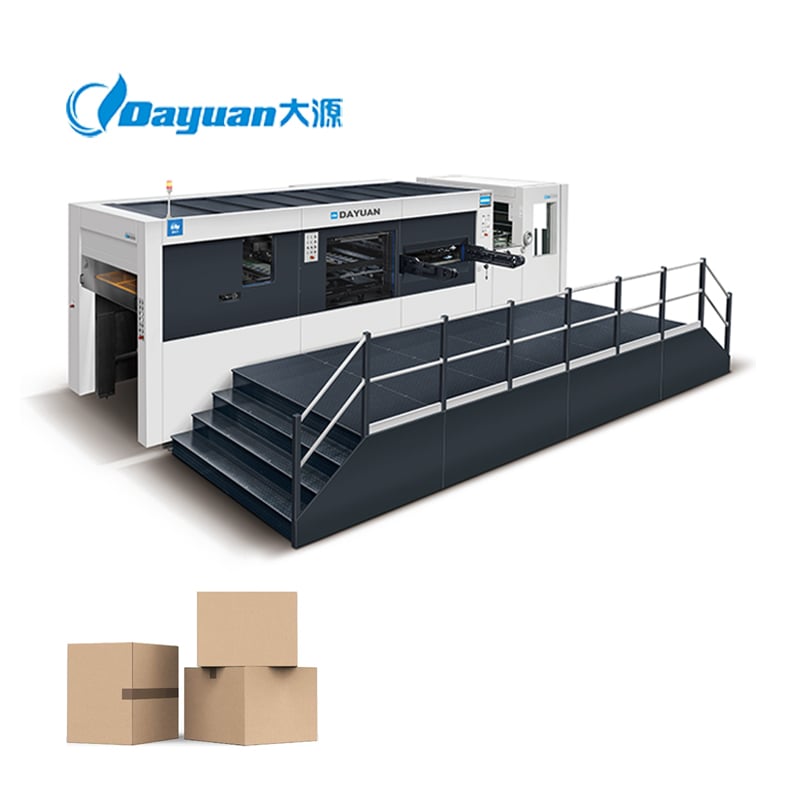
Selecting the right die cutting machine for high-volume paper packaging is an important decision for packaging manufacturers. The machine's working speed, cutting accuracy, material compatibility, and automation level all affect production efficiency and finished-product consistency. For high-volume operations, the right die cutting machine should match the required sheet size, material thickness, production format, and expected workload.
This guide explains the main factors to consider when selecting a die cutting machine for paper and corrugated packaging. By comparing production requirements with machine specifications, manufacturers can select equipment that fits their packaging formats and supports consistent high-volume production.
Understanding Your Production Volume and Speed Requirements
Assessing Production Output Requirements
Before selecting a die cutting machine, determine the sheet sizes, packaging formats, material types, and production volumes required by your operation. High-volume paper packaging production may involve different box and carton formats, so the machine should provide a suitable working area for the largest commonly processed sheets. It is also important to consider peak production periods rather than evaluating equipment only against average workload. Matching the machine configuration to actual production requirements helps avoid unnecessary capacity limitations during busy periods.
Matching Machine Speed to Production Goals
Machine speed is an important consideration when comparing equipment for high-volume packaging. According to Dayuan's technical parameters, the BHT-1060 can reach a maximum working speed of 9,000 sheets per hour, while other configurations in the same series have different rated speeds. For larger corrugated packaging applications, large-format equipment is available with model-specific working speeds based on machine size and configuration. These figures represent maximum machine speeds, so actual production output depends on factors such as sheet format, material, die layout, and operating conditions.
Evaluating Machine Specifications and Technical Capabilities
Cutting Precision and Dimensional Accuracy
Consistent cutting accuracy is important for paper packaging because die-cut components must maintain their intended dimensions throughout production. The BHT-1060 series specifies die cutting accuracy of up to ±0.075 mm. This provides a clear reference when evaluating precision requirements for cardboard and corrugated packaging applications. When comparing a die cutting machine, manufacturers should review the specified cutting accuracy, sheet positioning system, and suitability for their actual packaging formats rather than relying on a general tolerance value.
Material Compatibility and Working Area
Material compatibility should be evaluated together with sheet size and thickness. The BHT-1060 series supports cardboard from 80 to 2,000 g/m² and 0.1 to 2 mm in thickness, as well as corrugated board up to 4 mm. The maximum sheet size is 1,060 × 760 mm, with a maximum cutting size of 1,060 × 745 mm. For larger corrugated packaging applications, Dayuan also offers large-format die cutting equipment designed to handle corrugated board up to 9 mm. Selecting the appropriate machine therefore requires matching the working area and material range to the packaging products being manufactured.
Assessing Production Economics and Operational Efficiency
Waste Reduction and Material Yield
Material utilization is an important consideration in high-volume paper packaging because inefficient sheet layouts can increase material waste. A die cutting machine with accurate positioning and stable cutting performance can support consistent die-cutting results across production runs. Instead of assuming a fixed percentage of material savings, manufacturers should evaluate actual material yield using their own packaging designs, sheet formats, and die layouts. Production trials can provide a more reliable basis for comparing equipment and determining how effectively a machine handles specific packaging jobs.
Automation and Production Workflow
Automation is another important factor when selecting equipment for high-volume packaging. Dayuan's automatic die cutting machines integrate automated sheet feeding, conveying, die cutting, and delivery processes to support continuous production. For larger corrugated applications, the automatic die cutting machine linkage production line adds automated equipment for larger-format production workflows. Manufacturers should consider how the machine's feeding, cutting, stripping, and delivery functions fit into their existing workflow when evaluating overall production efficiency.
Choosing the Appropriate Machine Format for Packaging Applications
Matching Machine Size to Packaging Format
The required sheet size is one of the most important factors when selecting a die cutting machine. The BHT-1060 series has a maximum sheet size of 1,060 × 760 mm and a maximum cutting size of 1,060 × 745 mm. For larger corrugated packaging, Dayuan's large-format die cutting and creasing equipment provides larger working formats, with the largest configuration supporting sheets up to 2,100 × 1,600 mm. Selecting a machine with an appropriate working area helps ensure that the packaging format does not become a limitation during production.
Considering Corrugated Packaging Requirements
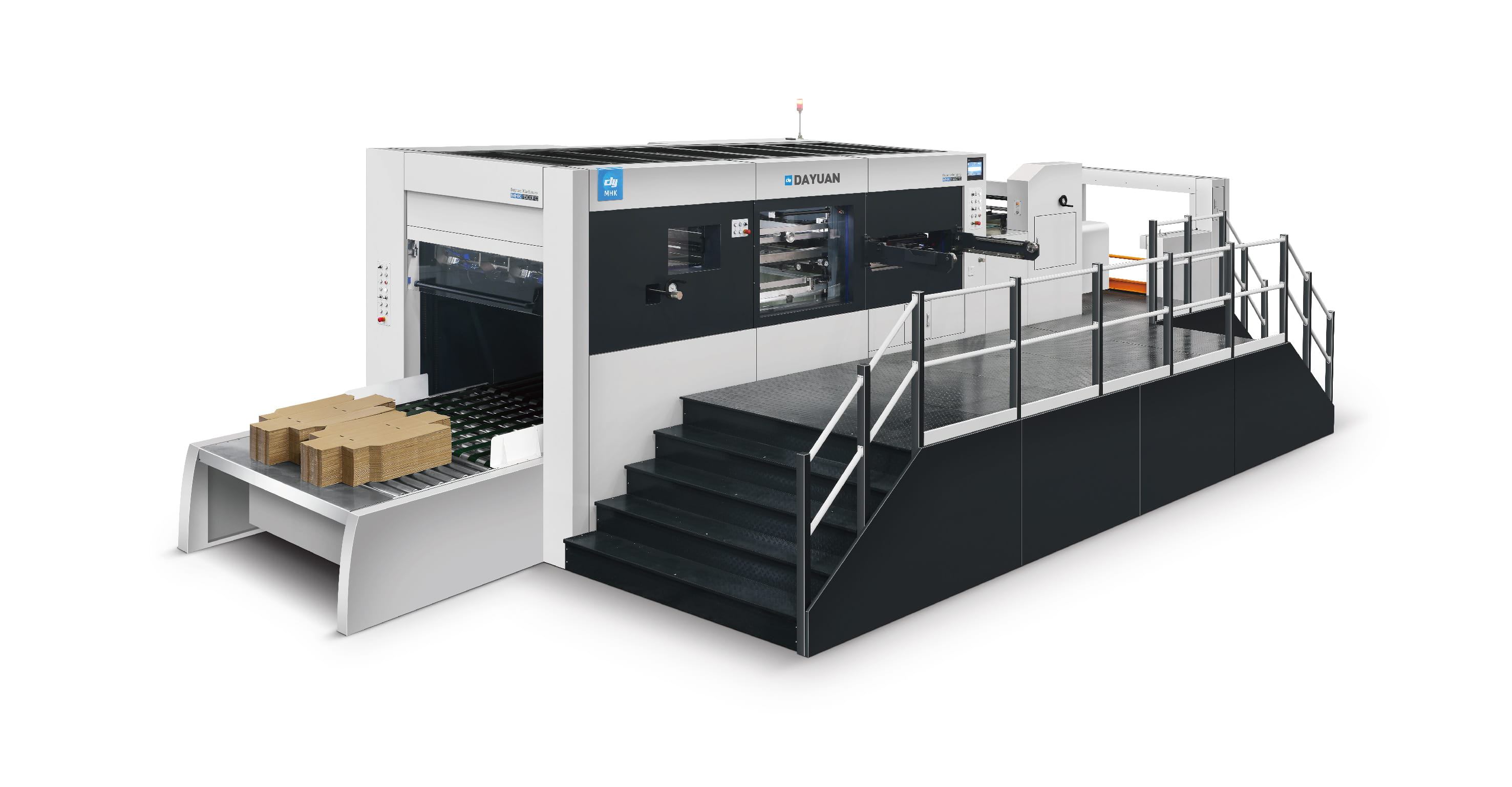
Large-format corrugated packaging often requires equipment with a larger working area and sufficient cutting force. Dayuan's BHT-FC/EFC equipment is developed for corrugated packaging applications and supports F, E, B, C, A, and AB corrugated board with a maximum thickness of up to 9 mm. Depending on the configuration, the published maximum cutting force reaches up to 450 tons. These specifications should be considered together with sheet dimensions, board structure, and the actual packaging formats being produced.
FAQ
Machine speed for high-volume paper packaging
The required speed depends on the packaging format, material, sheet size, and production schedule. Dayuan's technical specifications show that the BHT-1060 can reach a maximum working speed of 9,000 sheets per hour. Larger-format equipment uses different rated speeds according to machine configuration and working area. These figures are maximum machine speeds rather than guaranteed finished-product output, so production planning should account for the actual job configuration and operating conditions.
Machine size selection for different packaging formats
Machine size should be selected according to the largest sheet that needs to be processed. The BHT-1060 series supports a maximum sheet size of 1,060 × 760 mm and a maximum cutting size of 1,060 × 745 mm. For larger corrugated packaging, Dayuan's large-format equipment provides substantially larger working dimensions, with the largest published configuration supporting a sheet size of 2,100 × 1,600 mm. Manufacturers should compare these dimensions with their actual die layouts and packaging sheet sizes before selecting equipment.
Material compatibility for die cutting applications
Material compatibility should be checked against the machine's published specifications. The BHT-1060 series supports cardboard from 80 to 2,000 g/m² and 0.1 to 2 mm in thickness, together with corrugated board up to 4 mm. Dayuan's large-format corrugated equipment supports corrugated board up to 9 mm and covers F, E, B, C, A, and AB flute structures. The specific processing capability depends on the machine configuration, so manufacturers should match the published material range with the board types used in their packaging production.
Cutting accuracy requirements for packaging production
Cutting accuracy should be evaluated according to the packaging structure and required dimensional consistency. The BHT-1060 series specifies die cutting accuracy of up to ±0.075 mm, while Dayuan's large-format corrugated equipment specifies die cutting accuracy of up to ±0.2 mm. The appropriate specification depends on the machine configuration and packaging application. Manufacturers should compare the published accuracy with their die-cutting requirements and verify performance under their actual material and production conditions.