 EN

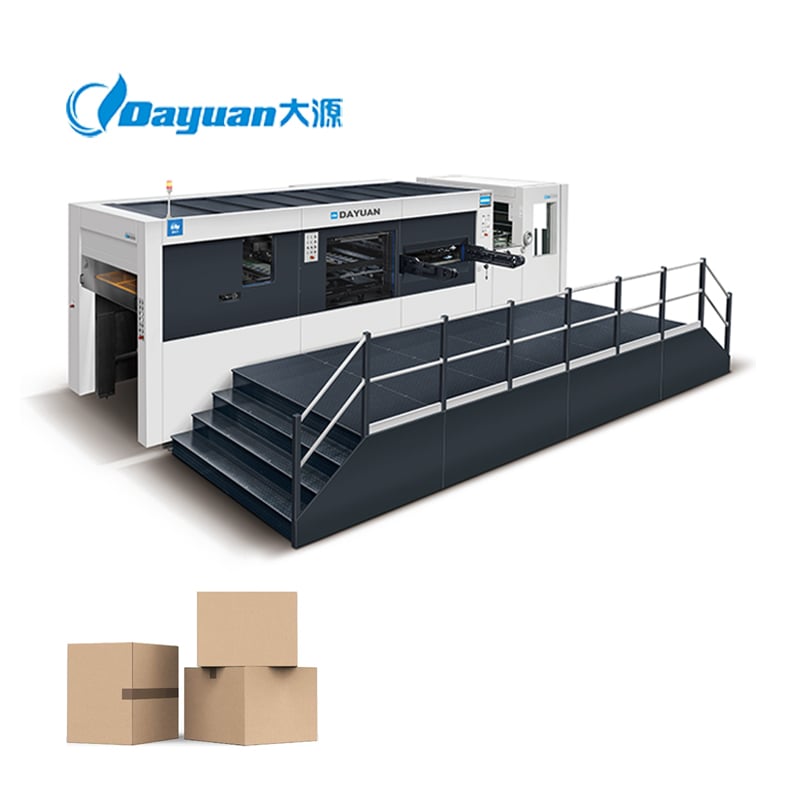
The manufacturing industry demands precision, speed, and consistency. A modern die cutting machine must match the production requirements of its intended application, including material type, sheet size, cutting accuracy, and working speed. Rather than relying on a single universal performance benchmark, manufacturers should evaluate machine specifications against the actual requirements of their paper and packaging production processes.
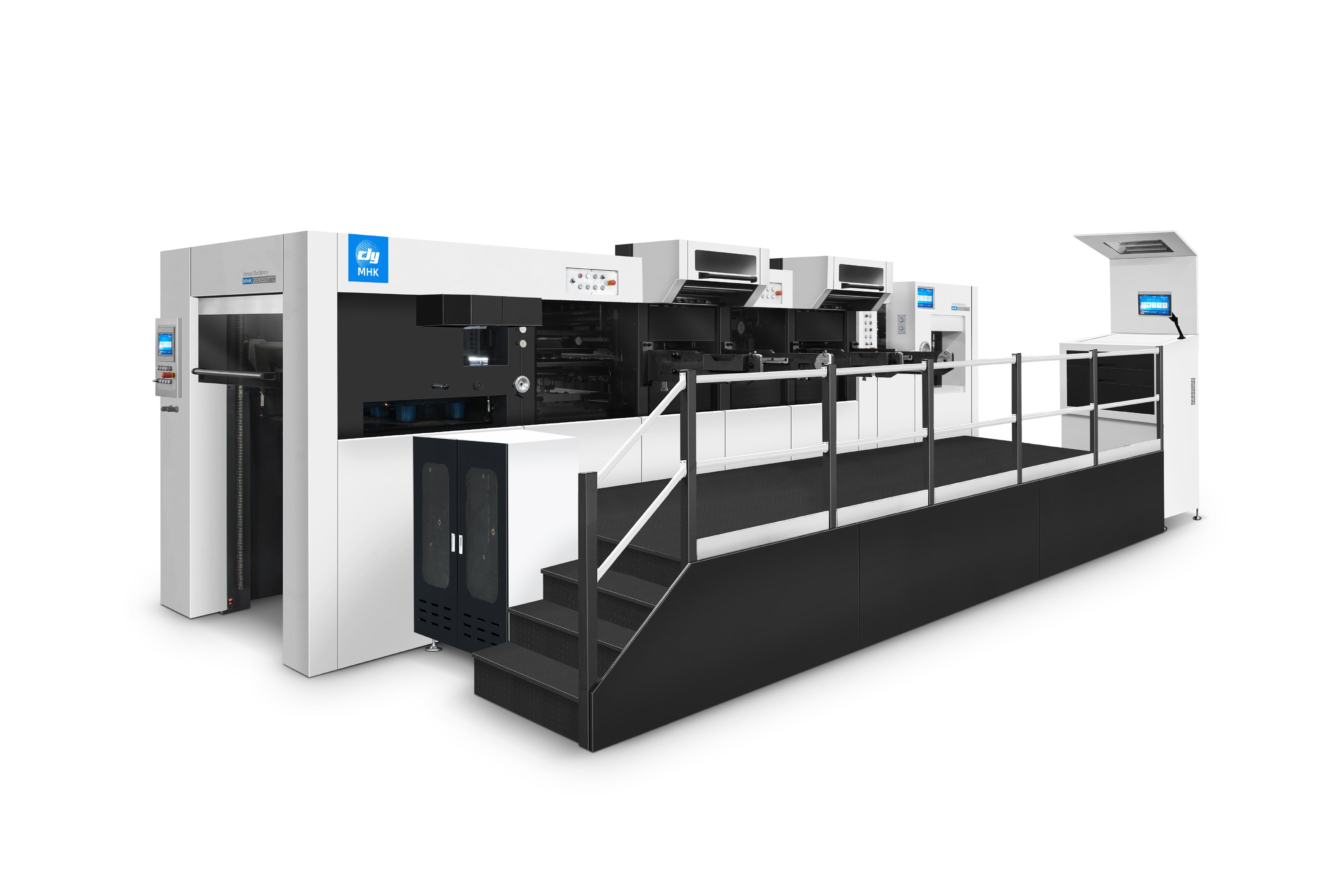
Understanding how a die cutting machine performs under real production conditions is important for maintaining operational efficiency. Packaging and printing manufacturers need equipment that can process the required paper or board materials at an appropriate speed while maintaining consistent cutting quality. Reviewing published technical specifications, machine safety features, and production capabilities provides a more useful basis for equipment evaluation than applying a single industry-wide performance figure.
Performance Standards for Modern Die Cutting Machines
Speed and Throughput Requirements
There is no single universal speed requirement that applies to every die cutting machine. Working speed is normally specified in sheets per hour for sheet-fed equipment, and the appropriate level depends on the machine design, sheet size, material, die layout, and production requirements. For example, Dayuan's MHK-2S1050TTC high-speed hot stamping and die cutting machine has a maximum working speed of 7,200 sheets per hour. The BHT-1060 automatic die cutting machine can reach a maximum working speed of 9,000 sheets per hour according to its technical specifications.
Speed should therefore be evaluated together with production consistency rather than treated as an isolated benchmark. A high-speed die cutting machine should maintain stable feeding, positioning, and cutting performance throughout the production run. When comparing equipment, manufacturers should review the published maximum working speed and confirm how the machine performs with their actual sheet formats and materials.
Precision and Tolerance Standards
Cutting accuracy is another important specification when evaluating a die cutting machine. There is no universal requirement that every machine must maintain a tolerance of ±0.5 millimeters. Instead, the required accuracy depends on the packaging structure, die design, material, and finished-product requirements. Dayuan's MHK-2S1050TTC specifies die cutting accuracy of up to ±0.075 mm, providing a concrete manufacturer-published reference for precision performance.
Machine features such as servo-controlled positioning, micro-adjustment systems, and stable gripper-bar movement can contribute to consistent registration and cutting performance. Dayuan's MHK-2S1050TTC uses a servo-controlled gripper bar positioning system and specifies positioning precision of ±0.075 mm. Manufacturers should evaluate the relevant published accuracy for the specific machine configuration rather than assuming that every die cutting machine uses the same tolerance standard.
Compliance and Safety Standards
Regulatory Framework for Die Cutting Equipment
A die cutting machine must meet the safety and conformity requirements applicable in the market where it is placed on the market or used. In the European Union, CE marking is part of the applicable machinery conformity framework. EU machinery legislation is also changing from Directive 2006/42/EC to Regulation (EU) 2023/1230, with the new regulation generally applying from January 20, 2027. Manufacturers and buyers should therefore verify the requirements that apply to the machine and market at the relevant time rather than referring to the Machinery Directive as the only current framework.
For the United States, OSHA requirements apply to workplace safety, including machine guarding where employees may be exposed to machinery hazards. Relevant ANSI standards may also provide applicable technical guidance depending on the equipment and application. When evaluating a die cutting machine, review guarding, emergency-stop arrangements, access protection, operating instructions, and the manufacturer's conformity or safety documentation instead of assuming that a particular certification label alone establishes compliance.
Environmental and Operational Considerations
Noise, energy use, and workplace conditions can also be relevant when evaluating die cutting equipment. However, a fixed value such as 85 decibels should not be presented as a universal maximum noise level for every die cutting machine. In the United States, OSHA uses an 85 dBA eight-hour time-weighted average as an occupational noise exposure action level in applicable circumstances, which is different from defining a machine's maximum permitted noise output.
Energy consumption should likewise be evaluated using the manufacturer's published electrical specifications and the operating conditions of the production line. Dayuan publishes electrical and power information for its machine configurations, allowing buyers to consider power requirements as part of equipment planning. Environmental and operational requirements should be assessed according to the actual factory, machine configuration, and applicable local regulations rather than assigning a universal efficiency or sustainability threshold to all die cutting machines.
Integration with Modern Production Systems
Connectivity and Data Exchange Capabilities
Digital integration can be useful in modern production environments, but there is no universal requirement that every die cutting machine support a particular Industry 4.0 protocol, ERP connection, API, or predictive-maintenance system. These capabilities should be evaluated according to the needs of the manufacturer's production environment and the configuration offered by the equipment supplier.
When digital integration is important, manufacturers can ask suppliers about available control interfaces, production monitoring functions, data recording, remote support, and compatibility with existing systems. These questions help determine whether a die cutting machine can fit the wider production workflow without assuming that a specific connectivity feature is an industry-wide requirement.
Flexibility and Changeover Efficiency
Changeover efficiency is an important consideration for manufacturers producing multiple packaging formats. Instead of relying on a universal 15- to 30-minute changeover benchmark, buyers should compare the machine's setup procedures and evaluate them using their own dies and production conditions. Quick positioning, micro-adjustment, and accessible setup functions can help reduce unnecessary downtime between jobs.
Dayuan's die cutting equipment includes micro-adjustment features designed to support setup and positioning. The MHK-2S1050TTC also uses a micro-adjustable frame with a quick positioning device and a micro-adjustable die cutting plate. Manufacturers should assess these functions during equipment demonstrations and determine whether they suit their die formats, production volumes, and operator workflow.
FAQ
What specific performance metrics should I use to evaluate whether my die cutting machine meets high-speed standards?
Evaluate the die cutting machine using several measurable factors rather than one universal speed standard. Review the manufacturer's maximum working speed in sheets per hour, cutting accuracy, sheet-size range, compatible material thickness, and available automation functions. Also consider feeding stability, positioning performance, setup procedures, and delivery performance during actual production. For example, Dayuan's MHK-2S1050TTC specifies a maximum working speed of 7,200 sheets per hour and die cutting accuracy of up to ±0.075 mm. Comparing published specifications with results from actual production trials provides a more useful assessment of machine performance.
How frequently should I upgrade my die cutting machine to maintain compliance with evolving standards?
There is no universal replacement interval that applies to every die cutting machine. Compliance requirements depend on the market, the applicable regulations, the machine's condition, and whether the equipment remains suitable for its intended use. Instead of replacing equipment according to an arbitrary age limit, manufacturers should review safety requirements, machine performance, maintenance history, production demands, and available technical support. Regulatory changes should also be monitored separately from normal equipment replacement decisions so that compliance issues are identified when they actually apply.
Are there industry-specific die cutting machine standards I should know about for my particular application?
Yes. Requirements can vary according to the market, workplace environment, packaging application, and materials being processed. Paper and cardboard packaging manufacturers should verify the machine's compatible material range, sheet dimensions, cutting accuracy, and safety documentation against their production requirements. For regulated or specialized applications, additional customer or sector-specific requirements may also apply. The appropriate approach is to confirm the relevant requirements with the machine manufacturer, regulatory authorities, and applicable industry organizations rather than assuming that one standard covers every die cutting machine application.
Table of Contents
- Performance Standards for Modern Die Cutting Machines
- Compliance and Safety Standards
- Integration with Modern Production Systems
-
FAQ
- What specific performance metrics should I use to evaluate whether my die cutting machine meets high-speed standards?
- How frequently should I upgrade my die cutting machine to maintain compliance with evolving standards?
- Are there industry-specific die cutting machine standards I should know about for my particular application?