Machine Stripping Solutions: Advanced Wire Processing Equipment for Precision and Efficiency

+86-577-58918888
All Categories

machine stripping

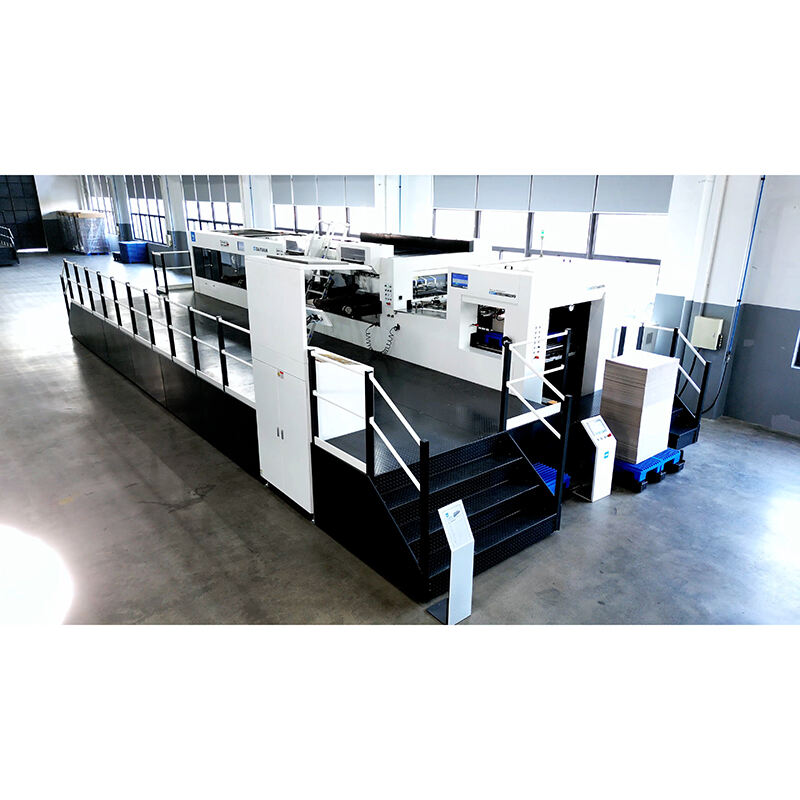
Machine stripping represents a revolutionary advancement in wire and cable processing technology, designed to automate the tedious and time-consuming task of removing insulation from electrical conductors. This sophisticated equipment has transformed manufacturing operations across multiple industries by delivering precise, consistent, and efficient stripping capabilities that manual methods simply cannot match. At its core, machine stripping utilizes advanced blade systems, laser technology, or thermal methods to carefully remove protective coatings from wires without damaging the underlying conductive material. The main functions of machine stripping equipment include adjustable stripping lengths, variable wire diameter accommodation, and programmable settings that allow operators to customize processing parameters for different cable types. Modern machine stripping systems incorporate sophisticated sensors and control mechanisms that detect wire dimensions automatically, adjust blade pressure accordingly, and ensure uniform results across thousands of repetitions. Technological features distinguish contemporary machine stripping solutions from their predecessors, with digital interfaces replacing analog controls, servo motors providing unprecedented precision, and integrated quality monitoring systems that detect anomalies in real-time. These machines excel at processing diverse cable types ranging from delicate communication wires to heavy-gauge power cables, adapting seamlessly to varying insulation materials including PVC, rubber, Teflon, and silicone compounds. Applications for machine stripping span automotive manufacturing where harness production demands high-volume processing, aerospace industries requiring meticulous precision for critical avionics systems, consumer electronics assembly operations, renewable energy installations, telecommunications infrastructure development, and industrial equipment manufacturing. The versatility of machine stripping technology enables manufacturers to handle both prototype development with small batch requirements and mass production scenarios demanding continuous operation. Environmental considerations have also influenced machine stripping design, with modern systems incorporating dust collection features, waste separation mechanisms, and energy-efficient operation modes that reduce ecological impact while maintaining productivity standards.

New Products

Investing in machine stripping technology delivers transformative benefits that directly impact your bottom line and operational efficiency. First and foremost, these systems dramatically increase processing speed compared to manual stripping methods, enabling workers to complete projects in a fraction of the time previously required. Where a technician might manually strip fifty wires per hour, machine stripping equipment processes hundreds or even thousands during the same period, multiplying output without proportionally increasing labor costs. This acceleration allows businesses to accept larger orders, meet tighter deadlines, and respond more quickly to customer demands. Consistency represents another critical advantage, as machine stripping eliminates the human variability that leads to quality issues. Every wire receives identical treatment with precise blade positioning, controlled pressure application, and accurate stripping lengths that conform exactly to specifications. This uniformity reduces defect rates, minimizes material waste, and ensures products meet stringent quality standards consistently. Cost savings accumulate across multiple dimensions when implementing machine stripping solutions. Labor expenses decrease as fewer workers accomplish more work, while reduced error rates mean less material discarded due to improper stripping. The speed and reliability of automated systems also decrease production timelines, lowering overhead costs associated with extended manufacturing cycles. Worker safety improves substantially with machine stripping adoption, as employees no longer perform repetitive motions that cause strain injuries or handle sharp blades that risk cuts. Ergonomic benefits extend beyond injury prevention to include reduced fatigue, allowing staff to maintain focus on oversight responsibilities rather than exhausting physical tasks. Flexibility ranks among the most appreciated advantages, with modern machine stripping equipment accommodating wide diameter ranges, various insulation types, and different stripping requirements through simple adjustments. This adaptability means a single machine handles diverse projects without requiring multiple specialized tools. Scalability becomes straightforward as business grows, with machine stripping systems capable of operating extended hours or integrating into automated production lines. Data collection capabilities built into advanced models provide valuable insights into production metrics, equipment performance, and process optimization opportunities. Training requirements remain minimal, as intuitive interfaces and preset programs enable new operators to achieve proficiency quickly. Maintenance demands stay reasonable with robust construction and accessible components that facilitate routine servicing. The professional appearance of machine-stripped wires enhances product perception, communicating quality and precision to customers who recognize superior craftsmanship. Return on investment materializes rapidly as productivity gains, quality improvements, and cost reductions compound over time, typically justifying the initial equipment expenditure within months of implementation.

Tips And Tricks

What Should You Look for When Selecting a Paper Cutter Machine for Various Paper Types and Thicknesses?

17

Jan

What Should You Look for When Selecting a Paper Cutter Machine for Various Paper Types and Thicknesses?

Selecting the right paper cutter machine for your business operations requires careful consideration of multiple factors that directly impact productivity, quality, and cost-effectiveness. Whether you're operating a commercial printing facility, pack...
View More
Why Is a Paper Cutter Machine a Vital Tool for Achieving Clean Edges in Print and Publishing Work?

20

Jan

Why Is a Paper Cutter Machine a Vital Tool for Achieving Clean Edges in Print and Publishing Work?

In the high-stakes world of professional print and publishing, the difference between good and exceptional often lies in the details unseen by the untrained eye. Among these, the precision of a clean, sharp edge is paramount. It is the final signatur...
View More
Why Is Blade Quality Critical for Consistent Performance in Paper Cutter Machines?

18

Mar

Why Is Blade Quality Critical for Consistent Performance in Paper Cutter Machines?

The precision and efficiency of paper cutter machines directly depend on the quality of their cutting blades, making blade selection one of the most critical factors in achieving consistent performance across industrial applications. Professional pri...
View More
What Patented Technologies Should You Look for in a High-Performance Paper Die Cutting Machine?

02

Apr

What Patented Technologies Should You Look for in a High-Performance Paper Die Cutting Machine?

When investing in a high-performance paper die cutting machine for industrial production, understanding the patented technologies that differentiate premium equipment from standard alternatives becomes crucial for making informed purchasing decisions...
View More

Get a Free Quote

Our representative will contact you soon.
Email
Name
Company Name
Required Product
Message
0/1000

machine stripping

Precision Control Technology Ensures Perfect Results Every Time

Precision Control Technology Ensures Perfect Results Every Time

The precision control technology integrated into modern machine stripping systems represents a quantum leap forward in wire processing capability, delivering results that manual methods simply cannot replicate regardless of operator skill level. At the heart of this technological advancement lies sophisticated microprocessor control that coordinates multiple operational parameters simultaneously, creating a harmonized stripping process where blade position, pressure application, wire feeding speed, and cutting depth work in perfect synchronization. Advanced servo motors provide positioning accuracy measured in hundredths of millimeters, ensuring that insulation removal occurs at exactly the specified location without variation across thousands of cycles. This extraordinary precision proves essential for applications where stripped length tolerances directly affect product functionality, such as connector terminations requiring specific conductor exposure or splice preparations demanding exact measurements. Digital feedback systems continuously monitor operational parameters, detecting any deviation from programmed settings and making instantaneous corrections before defects occur. Optical sensors scan wire diameter prior to processing, automatically adjusting blade opening and pressure to accommodate size variations without operator intervention. This intelligent adaptation prevents both incomplete stripping that leaves insulation remnants and excessive pressure that damages conductor strands. Force monitoring technology measures the resistance encountered during stripping, providing real-time verification that blades penetrate insulation completely while stopping short of scoring the metal beneath. Programmable memory stores settings for different wire specifications, allowing operators to switch between cable types with simple button presses rather than manual recalibration. Touchscreen interfaces display operational status clearly, presenting information about cycle counts, processing speed, and performance metrics that facilitate production monitoring. The precision inherent in machine stripping technology eliminates the inconsistencies that plague manual operations, where fatigue, distraction, or varying technique produce stripped wires with differing qualities. Quality control becomes simpler as every processed wire meets identical standards, reducing inspection requirements and increasing confidence in production output. This reliability proves particularly valuable in regulated industries where documentation requirements and traceability standards demand consistent processing. Precision control also extends equipment longevity by preventing the excessive wear that occurs when components operate outside optimal parameters, protecting your investment through intelligent operation management.
Versatile Processing Capabilities Handle Diverse Wire Types and Specifications

Versatile Processing Capabilities Handle Diverse Wire Types and Specifications

The versatile processing capabilities built into contemporary machine stripping equipment empower manufacturers to address virtually any wire processing challenge with a single system, eliminating the need for multiple specialized tools and dramatically simplifying production workflows. This adaptability stems from engineering innovations that accommodate extraordinary ranges in wire diameter, insulation thickness, material composition, and stripping requirements without compromising performance quality. Adjustable blade assemblies expand and contract to accept wire gauges spanning from ultra-fine communication cables measuring fractions of a millimeter to heavy industrial conductors exceeding substantial diameters, providing flexibility that matches the diversity encountered in real-world manufacturing environments. Quick-change blade cartridges allow rapid reconfiguration when switching between wire types with different insulation characteristics, minimizing downtime between production runs and maximizing equipment utilization. Multiple stripping modes address various processing needs, including single-end stripping for connector preparation, double-end stripping for jumper wire fabrication, middle stripping for tap connections, and custom patterns for specialized applications. Length adjustment mechanisms enable precise control over stripped sections, accommodating specifications ranging from minimal exposures for delicate electronic assemblies to extended lengths for power distribution connections. Material compatibility extends across the full spectrum of insulation compounds encountered in electrical manufacturing, with machine stripping systems processing PVC, polyethylene, rubber, silicone, Teflon, and exotic materials used in specialized applications. Temperature control features prevent heat-sensitive insulations from melting or deforming during processing, while cooling systems protect conductors that might otherwise experience thermal damage. The ability to handle jacketed cables with multiple internal conductors adds another dimension to versatility, as some advanced systems strip outer jackets while preserving inner insulation integrity. Coaxial cable processing capabilities address the unique requirements of shielded communication cables, carefully removing outer jackets, exposing braided shields, and stripping inner dielectrics without disturbing delicate center conductors. Flat ribbon cable compatibility extends processing versatility into electronics assembly applications, where precise individual conductor exposure within multi-wire ribbons requires specialized handling. This comprehensive capability portfolio means businesses can consolidate wire processing operations around machine stripping platforms rather than maintaining inventories of specialized manual tools, simplifying training requirements, reducing equipment costs, and streamlining maintenance responsibilities while simultaneously expanding manufacturing capabilities beyond what manual methods could achieve.

Enhanced Productivity and Efficiency Transform Manufacturing Operations

Enhanced Productivity and Efficiency Transform Manufacturing Operations

Enhanced productivity and efficiency delivered by machine stripping technology fundamentally transform manufacturing operations, creating competitive advantages that extend far beyond simple processing speed improvements to encompass operational excellence across multiple business dimensions. The dramatic acceleration in wire processing throughput represents the most immediately visible benefit, with automated systems completing stripping operations at rates that dwarf manual capabilities by orders of magnitude. High-performance models process wires continuously at speeds measured in units per minute rather than per hour, transforming bottlenecks into streamlined operations that keep pace with upstream and downstream production stages. This velocity enables manufacturers to accept larger contracts without proportional increases in staffing, equipment footprint, or facility space, effectively multiplying capacity without corresponding capital expenditure. Continuous operation capabilities allow machine stripping equipment to maintain production during extended shifts or lights-out manufacturing periods, accumulating output during hours when manual operations would cease. Batch processing efficiency improves as setup times diminish through programmable presets that recall optimal settings instantly, eliminating the trial-and-error adjustments that consume time in manual operations. Material utilization reaches maximum efficiency as consistent stripping quality reduces waste from damaged wires, while precise length control eliminates the excessive margins that manual operators typically add as safety buffers. Labor allocation becomes more strategic as workers transition from repetitive stripping tasks to value-added responsibilities like quality oversight, equipment monitoring, and process optimization. This redeployment improves job satisfaction by eliminating tedious work while simultaneously elevating skill requirements and compensation potential. Production planning gains flexibility as reliable processing times enable accurate scheduling, reducing uncertainty that necessitates excessive lead times or capacity buffers. Integration capabilities allow machine stripping systems to function within automated production lines, feeding processed wires directly to subsequent operations like connector crimping or soldering without manual transfer steps. Statistical process control features generate performance data that identifies optimization opportunities, tracks efficiency trends, and provides objective metrics for continuous improvement initiatives. Preventive maintenance scheduling based on actual usage rather than elapsed time maximizes uptime while minimizing unnecessary service interventions. Energy efficiency engineered into modern systems reduces operational costs while supporting environmental sustainability objectives, with power consumption per processed unit substantially lower than older technologies. The cumulative effect of these productivity and efficiency enhancements creates manufacturing operations that respond faster to market demands, deliver higher quality products, operate at lower costs, and provide superior returns on invested capital compared to facilities relying on traditional manual wire stripping methods.

Get a Free Quote

Our representative will contact you soon.
Email
Name
Company Name
Required Product
Message
0/1000