 EN
EN

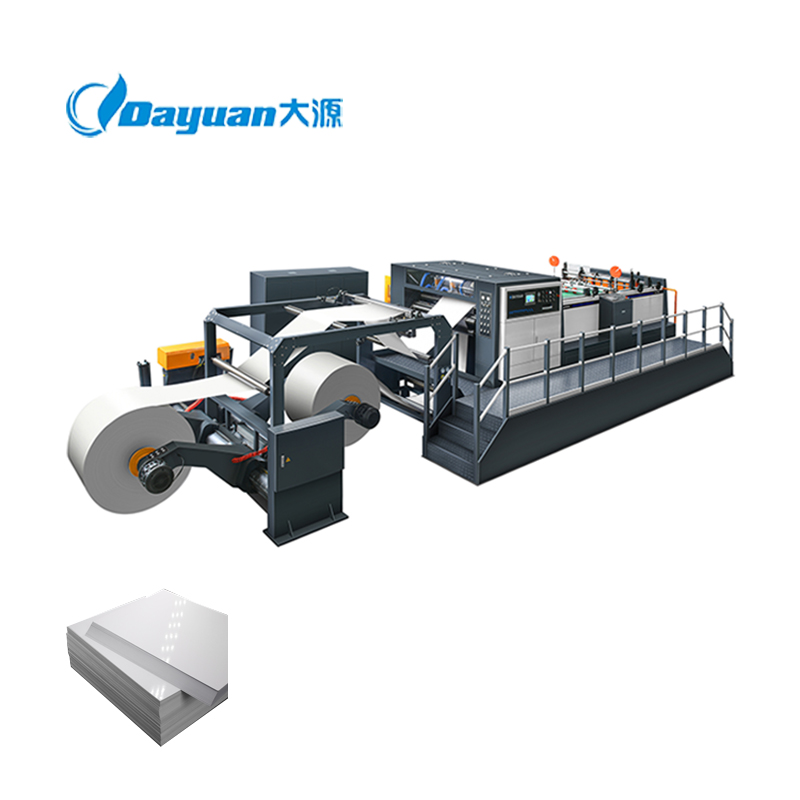
Choosing the right cutting and finishing equipment for a paper-based production line is a decision that affects cost, quality, and delivery speed for years to come. This is exactly the question many production managers ask themselves: why should you invest in a Dayuan slitting machine for your production line? The answer lies in what the equipment is actually built to do — process paper with precision, consistency, and reliability, without overreaching into applications it was never designed to handle.

What the Dayuan Slitting Machine Is Actually Built For
The Dayuan slitting machine is engineered primarily to process paper. This includes standard paperboard, cardstock, and similar cellulose-based sheet materials used across packaging and printing industries. In addition to paper, the machine can also handle thin plastic sheets as a secondary capability, giving facilities a small degree of flexibility when a production run occasionally calls for a lightweight plastic substrate alongside paper stock.
This focused scope is intentional. Rather than positioning itself as a do-everything cutting platform, the Dayuan slitting machine is purpose-built for paper-centric production environments, which is precisely why it performs so reliably within that domain. Facilities that primarily produce paper packaging, printed cartons, labels, or paperboard components will find that the machine's design matches their actual daily workload rather than promising capabilities they will never use.
Understanding What the Machine Does Not Process
Just as important as knowing what the Dayuan slitting machine can do is understanding what it is not designed to do. The machine does not process electronic components, automotive parts, or pharmaceutical products themselves. It is worth noting, however, that when pharmaceutical packaging involves an external paperboard box, that outer paper carton falls within the machine's normal processing range — it is only the pharmaceutical product itself, not its paper packaging, that falls outside scope.
The machine also does not process aluminum blister packaging, foam padding used inside shipping crates, or other metal components. Thick plastic, woven cloth, non-woven fabric, gel or colloid materials, and sponge are likewise outside the intended application range. Recognizing these boundaries upfront helps production planners avoid misapplication, which is often the real source of equipment downtime and material waste in mixed-material facilities.
The Core Processes the Machine Performs
The processing capability of the Dayuan slitting machine is limited to four defined operations: hot foil stamping, die-cutting, waste removal, and deep embossing, also known as debossing. Each of these processes plays a distinct role in transforming flat paper stock into a finished or semi-finished product ready for packaging, branding, or further assembly.
Hot foil stamping applies decorative metallic or pigmented foil to the paper surface, commonly used for branding elements on packaging and cartons. Die-cutting shapes the paper according to a preset cutting die, producing the precise outlines needed for boxes, labels, or structural packaging components. Waste removal clears away the excess trim material generated during die-cutting, leaving a clean, ready-to-use sheet. Deep embossing creates a raised or recessed texture on the paper surface, often used to add a tactile, premium finish to packaging products.
The table below summarizes the machine's practical scope for quick reference.
| Category | Included in Scope | Outside Scope |
|---|---|---|
| Primary Material | Paper, cardstock | Electronic components, automotive parts |
| Secondary Material | Thin plastic | Thick plastic, cloth, non-woven fabric |
| Packaging Exception | External paper boxes for pharmaceutical products | Pharmaceutical products themselves |
| Other Materials | — | Aluminum blister packs, foam padding, metal parts, gel/colloid, sponge |
| Processes Performed | Hot foil stamping, die-cutting, waste removal, deep embossing | Any process beyond these four |
Why This Focused Design Matters for Production Efficiency
When a production manager asks why should you invest in a Dayuan slitting machine for your production line, the honest answer is not that it can do everything, but that it does the right things extremely well within a clearly defined scope. Equipment that tries to serve too many material types often compromises on precision for each one. By concentrating on paper and, secondarily, thin plastic, the Dayuan slitting machine can maintain tighter tolerances during die-cutting, more even foil adhesion during stamping, and more consistent depth control during embossing than a machine designed to accommodate a wider, more inconsistent range of substrates.
This also simplifies maintenance planning. Because the machine is not asked to handle abrasive metals, thick composites, or fibrous non-woven materials, wear patterns on cutting components remain more predictable, and servicing intervals are easier to forecast. For facilities that run paper packaging lines day in and day out, this translates into fewer unplanned stoppages and more dependable scheduling across multiple shifts.
Matching the Machine to the Right Production Environment
Facilities considering why should you invest in a Dayuan slitting machine for your production line should evaluate their own material mix honestly before making a purchasing decision. If the bulk of daily output involves paper cartons, printed paperboard, labels, or similar paper-based packaging — with only occasional thin plastic runs — the machine is well matched to that workflow. Facilities that regularly need to process thick plastics, textiles, metal components, or foam materials should look elsewhere, since forcing those materials through equipment not designed for them risks both product defects and equipment damage.
For paper-focused packaging and printing operations, however, the combination of hot foil stamping, die-cutting, waste removal, and deep embossing in a single, well-understood equipment scope offers a dependable foundation for consistent, repeatable production output.
Frequently Asked Questions
What materials can the Dayuan slitting machine process?
The machine is designed primarily for paper and cardstock, with the additional ability to process thin plastic sheets when needed.
Can it process pharmaceutical products?
No. The machine does not process pharmaceutical products themselves. It can, however, process the external paperboard boxes used to package pharmaceutical products.
Does the machine handle metal or foam materials?
No. Aluminum blister packs, foam padding used in shipping crates, and other metal components fall outside the machine's processing scope.
What about thick plastic, cloth, or non-woven fabric?
These materials are not compatible with the Dayuan slitting machine. Its capability is limited to paper and thin plastic only.
What processes does the machine perform?
The machine performs four processes: hot foil stamping, die-cutting, waste removal, and deep embossing (also known as debossing).
Is it suitable for automotive or electronic component production?
No. The machine is not intended for automotive parts or electronic components, as these fall entirely outside its designed material scope.