 EN
EN

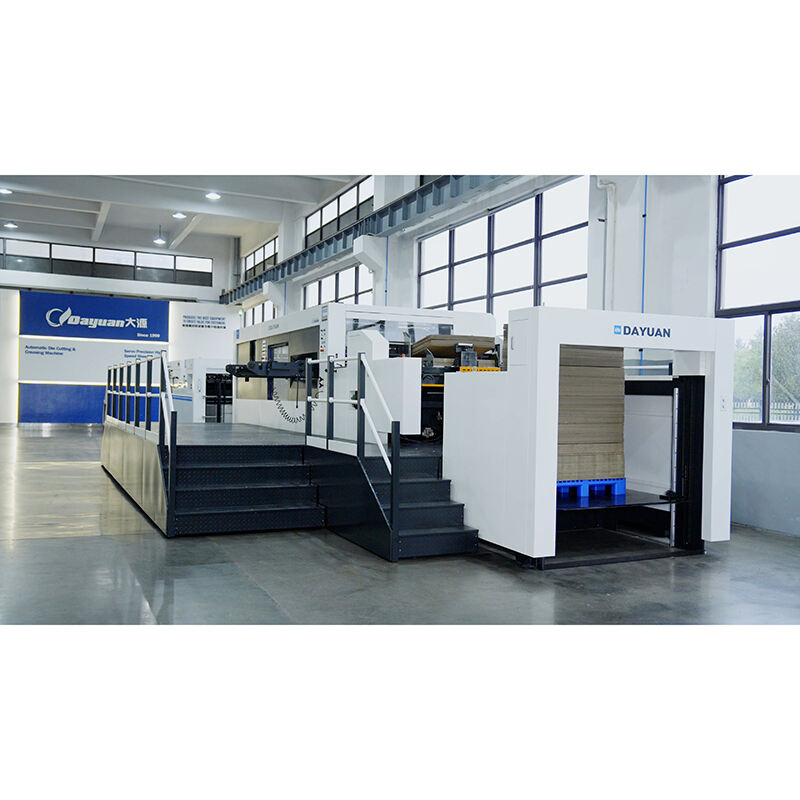
When it comes to precision cutting and creasing in commercial packaging and print finishing, the flatbed die cutter stands out as one of the most versatile machines in industrial production. Unlike rotary alternatives, the flatbed design uses a flat platen that presses uniformly across the entire sheet, enabling it to work with a remarkably wide range of material thicknesses. Understanding exactly how this process is managed — mechanically, operationally, and technically — is essential for buyers, production managers, and engineers who need reliable output across substrates of varying caliper.
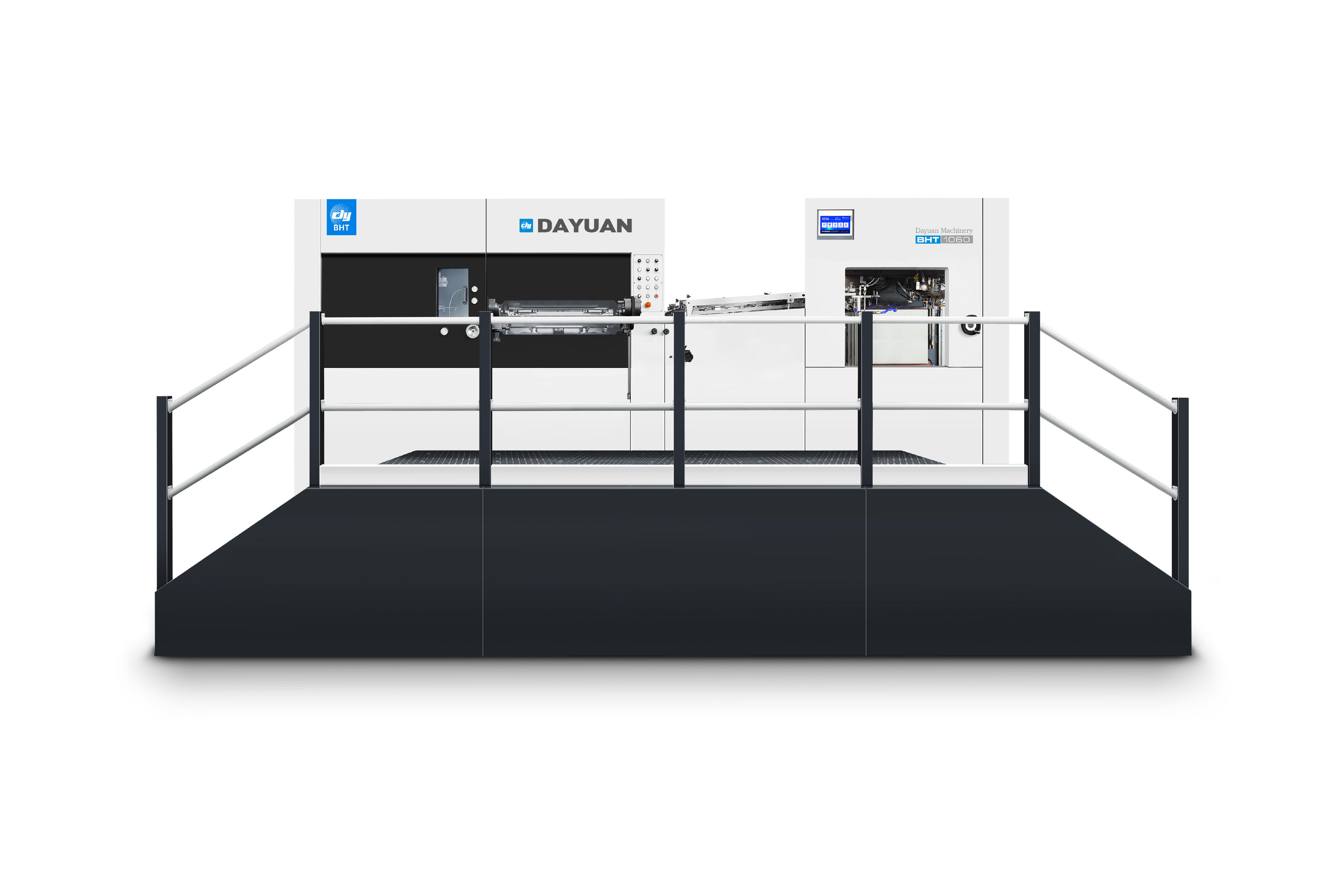
A flatbed die cutter does not apply a single fixed pressure to every job. Instead, it relies on a combination of adjustable cutting pressure, precision tooling, and controlled stroke mechanics to accommodate substrates from thin coated papers all the way to thick corrugated boards. This article explains in detail how these machines detect, adapt to, and process different material thicknesses — and why this mechanical flexibility makes the flatbed die cutter the go-to choice for high-demand, multi-substrate production environments.
The Mechanical Principle Behind Thickness Adaptation
How the Platen Press Manages Variable Substrate Depth
The core operational principle of a flatbed die cutter involves a vertically moving lower platen pressing a sheet of material against a stationary upper chase that holds the cutting and creasing die. The vertical stroke distance and the amount of pressure applied at the point of contact are the two primary variables that determine how different thicknesses are handled. For thinner materials, the platen needs to travel slightly farther to achieve full contact with the die, while for thicker substrates, the clearance between platen and chase is smaller at the point of contact.
Modern flatbed die cutters incorporate adjustable pressure settings that allow operators to fine-tune the cutting force in relation to substrate thickness. This is typically controlled through mechanical adjustment of the eccentric or toggle mechanisms that drive platen movement. When a thicker board enters the machine, operators must ensure the cutting pressure is high enough to penetrate the full caliper of the material without crushing or deforming it. Getting this balance right is a skill that combines machine knowledge with material understanding.
The design of the die board itself also plays a significant role. Rule heights on the die must be matched carefully to the substrate caliper. For a flatbed die cutter processing different thicknesses across a production run, this means the tooling must be swapped or shimmed to correspond with the new substrate depth. Precision in this setup step directly determines cut quality, particularly at the edges and scoring lines.
Pressure Regulation Systems in Modern Flatbed Die Cutters
Advanced flatbed die cutter models incorporate digitally controlled pressure regulation systems that allow operators to set parameters through a touchscreen interface. These systems translate operator input into precise mechanical adjustments, ensuring the platen exerts exactly the right force for a given substrate thickness. The feedback loops in these systems help prevent over-cutting on thin stock and under-cutting on heavy boards.
Some heavy-duty models, such as those designed for packaging-grade materials, feature pre-programmed pressure profiles that can be recalled for specific substrate categories. Once a profile is set for a particular paper weight or board thickness, it can be stored and applied instantly the next time the same material enters production. This significantly reduces setup time and operator error when switching between different thickness ranges during a single shift.
Pressure uniformity across the platen is equally important. High-quality flatbed die cutter machines use precision-ground platens and rigid frame constructions to ensure that pressure distribution remains consistent from corner to corner, even when sheet size varies. Any inconsistency in this distribution can cause partial cuts or irregular creases on certain areas of the substrate, particularly when processing thicker materials that demand higher overall force.
Substrate Range and Material Classification
Thin Coated Papers and Their Specific Demands
Thin coated papers, typically ranging from 80 gsm to 200 gsm, present a different set of challenges for a flatbed die cutter than heavier boards. At lower calipers, the risk of over-pressure is significant — excessive force can cause the material to tear, pucker, or distort during the cutting stroke. The machine must therefore be calibrated to apply the minimum necessary pressure to achieve clean cuts while avoiding surface damage.
For these lighter substrates, the die rule height is lower, and stripping sections of the die board must be softer to avoid excessive indentation on the sheet. The flatbed die cutter operator must also consider the gripper margin and sheet registration, since thinner materials are more susceptible to misalignment during feeding. High-precision feeder systems with gentle gripping mechanisms are essential to maintaining registration accuracy at high run speeds on thin stock.
Thin papers also require careful attention to creasing depth. When a flatbed die cutter applies a crease to light coated stock, the scoring must be deep enough to facilitate clean folding but not so aggressive that it breaks the surface coating or cracks the paper fiber. Operators typically use lower-profile creasing rules and softer counter materials to achieve this balance on substrates below 200 gsm.
Heavy Boards and Corrugated Substrates
At the opposite end of the spectrum, heavy-duty packaging boards ranging from 350 gsm to 2000 gsm — including microflute and corrugated cardboard — place entirely different demands on a flatbed die cutter. These materials require substantially higher cutting pressure, taller die rules, and more robust frame construction. A machine rated for heavy-duty work must be capable of delivering cutting forces measured in hundreds of kilonewtons without flexing or drifting during the stroke cycle.
The flatbed die cutter designed for heavy stock must also manage the compressibility of the substrate itself. Corrugated board, for example, contains a fluted core that compresses under force, meaning the machine must deliver sufficient pressure to cut through both liner layers without over-compressing the core to the point of structural damage. This requires precise control over the final depth of the platen travel, often achieved through mechanical stops or servo-controlled positioning.
Stripping and blanking operations are also more demanding with heavy substrates. The waste skeleton must be removed cleanly without tearing the finished blanks, which requires properly tensioned stripping tools matched to the substrate thickness and die geometry. A well-configured flatbed die cutter handles this automatically through its upper and lower stripping frames, which are adjusted to match each job's specific requirements.
Setup and Calibration for Multi-Thickness Production
Makeready Procedures When Switching Between Substrate Thicknesses
One of the most operationally significant aspects of managing different thicknesses on a flatbed die cutter is the makeready process. Every time a new substrate is introduced, the machine must be recalibrated to account for the new caliper. This typically involves adjusting the platen height, changing or shimming the die board, verifying gripper pressure, and running test sheets to confirm cut quality before committing to full production.
Modern flatbed die cutter systems have reduced makeready times significantly through digital job memory, pre-set pressure tables, and motorized platen adjustment. However, the fundamental logic remains the same: the machine parameters must be aligned with the physical properties of the material. Skipping this step — even partially — tends to result in cut quality issues that are expensive to remedy once a production run is underway.
Operators experienced with flatbed die cutter setups understand the importance of counter material selection as well. The cutting surface beneath the die must be matched to the substrate thickness and hardness. A cutting plate that is too hard can cause premature rule wear when cutting thick boards, while one that is too soft may not provide adequate support for thin papers, resulting in ragged cut edges.
Shimming and Die Board Adjustment for Accurate Depth Control
Shimming is a precise mechanical technique used on a flatbed die cutter to fine-tune the contact pressure across different areas of the die board. When working with substrates of varying thickness — or even when dealing with slight thickness inconsistencies within a single substrate batch — shimming allows the operator to compensate for pressure variations that would otherwise result in uneven cuts or creases.
The shimming process involves placing thin layers of material, typically polyester film or specialized shim stock, in specific areas beneath the die board or behind individual cutting rules. By selectively raising or lowering the cutting contact in targeted zones, the operator can achieve uniform cut depth across the entire sheet area. This is particularly important on large-format flatbed die cutter machines where slight frame deflection under load can cause pressure variation from center to edge.
Digital feeler gauges and pressure-sensitive testing sheets are commonly used during setup to identify areas that require shimming. An experienced setup technician can typically bring a flatbed die cutter into optimal calibration within a short number of test impressions, even when switching from a lightweight coated paper to a heavy packaging board. This efficiency in setup is a major factor in the overall productivity of flatbed die cutting operations.
Speed, Automation, and Thickness Handling at Scale
How Automation Features Support Consistent Thickness Management
In high-volume commercial environments, a flatbed die cutter must handle not just one thickness per shift but potentially multiple different substrates across different job runs. Automation features play a decisive role in maintaining consistency and speed under these conditions. Servo-driven feed systems, for example, automatically adjust sheet intake timing and gripper force based on the substrate weight and thickness that has been programmed into the job profile.
Automatic platen pressure adjustment systems take this further by dynamically compensating for minor variations in substrate caliper during a run. Even within a single pallet of board, slight thickness variations can occur due to manufacturing tolerances or humidity absorption. A flatbed die cutter with adaptive pressure control can detect these variations through real-time feedback and micro-adjust the cutting force to maintain consistent output quality throughout the run.
The delivery section of a flatbed die cutter must also be configured to handle the output from different thickness jobs. Thick boards require stronger jogger settings and wider delivery pile guides, while thin papers may need additional static control measures to prevent sheet flutter and misalignment in the delivery stack. These downstream adjustments are part of the full thickness management workflow on a professional flatbed die cutting line.
Thickness Limits and Machine Specifications
Every flatbed die cutter has defined operational limits for substrate thickness, typically expressed as a minimum and maximum caliper or grammage range. These specifications are set by the machine's structural design, cutting force rating, and feeding mechanism capabilities. Operating outside these limits — either below the minimum or above the maximum — risks inconsistent results, machine damage, or operator safety issues.
Heavy-duty flatbed die cutter models are engineered specifically to handle materials at the upper end of the thickness range, with reinforced frames, high-tonnage platen drives, and extra-capacity feeding systems. These machines are the appropriate choice for production environments where thick packaging boards, industrial substrates, or multi-ply materials are the primary workload. Selecting the right machine class for the target substrate range is a fundamental specification decision that affects the entire production workflow.
Understanding the rated substrate range of a flatbed die cutter before purchase prevents the common problem of over-loading a light-duty machine or underutilizing a heavy-duty model on thin materials. Both scenarios carry cost implications — either through premature machine wear or through unnecessary capital investment in over-specified equipment. Matching machine class to substrate demand is a core principle of efficient flatbed die cutting operation.
FAQ
Can a single flatbed die cutter handle both thin papers and thick boards in the same production facility?
Yes, many professional-grade flatbed die cutters are engineered to handle a broad substrate range within a single machine, from lightweight coated papers to heavy packaging boards. The key is proper configuration for each job, including die board adjustment, pressure calibration, and feeding system setup. However, the machine must be rated for the full thickness range required — a light-duty model will not reliably handle heavy corrugated stock even with careful adjustment.
How does a flatbed die cutter prevent damage to delicate thin materials during cutting?
For thin materials, the flatbed die cutter is calibrated to apply minimum effective cutting pressure, with soft stripping rubbers, low-profile creasing rules, and gentle feeder grippers. These settings prevent over-pressure damage, surface marking, and sheet distortion. Operators typically run test sheets to verify pressure settings before beginning full production on sensitive thin substrates.
What is the role of the cutting die rule height in managing different material thicknesses?
Die rule height must be precisely matched to the substrate caliper. Taller rules are used for thicker materials to ensure full penetration through the board, while shorter rules suit thinner papers. If the rule height is mismatched to the material thickness, the result is either incomplete cuts — where the rule does not reach the cutting plate — or excessive penetration, which can damage the plate and reduce die service life. Proper rule selection is a foundational element of flatbed die cutter setup for different thicknesses.
How often should pressure calibration be checked on a flatbed die cutter handling multiple substrate thicknesses?
Pressure calibration should be verified at the start of every new job involving a different substrate, and spot-checked periodically during long production runs. Factors such as die wear, platen surface condition, temperature changes in the pressroom, and substrate batch variation can all affect cutting pressure over time. Establishing a regular calibration protocol is essential for maintaining consistent output quality across different thicknesses on a flatbed die cutter.
Table of Contents
- The Mechanical Principle Behind Thickness Adaptation
- Substrate Range and Material Classification
- Setup and Calibration for Multi-Thickness Production
- Speed, Automation, and Thickness Handling at Scale
-
FAQ
- Can a single flatbed die cutter handle both thin papers and thick boards in the same production facility?
- How does a flatbed die cutter prevent damage to delicate thin materials during cutting?
- What is the role of the cutting die rule height in managing different material thicknesses?
- How often should pressure calibration be checked on a flatbed die cutter handling multiple substrate thicknesses?