 EN
EN

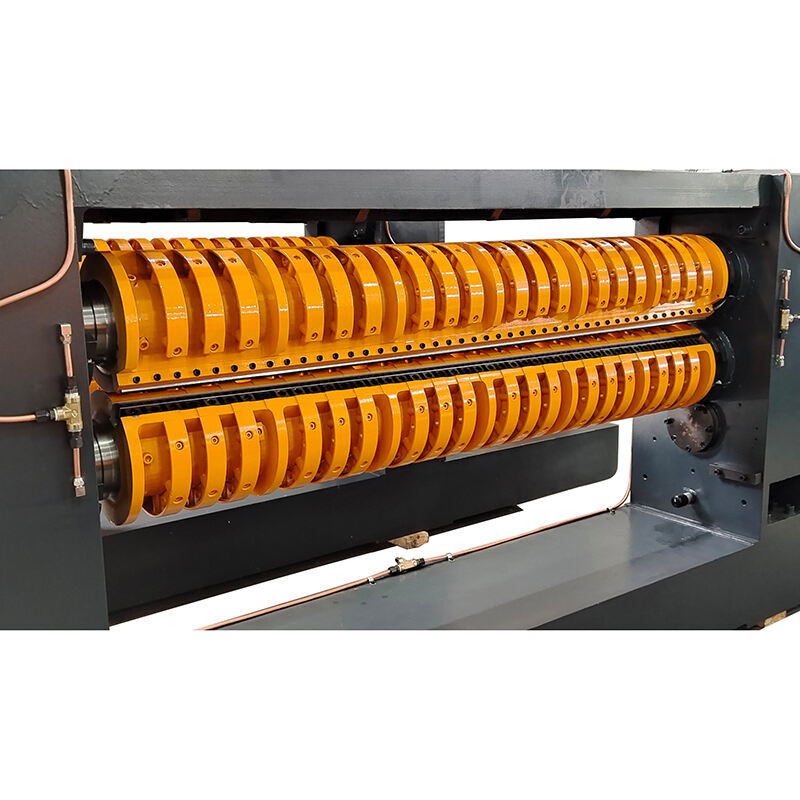
In any print production, packaging, or publishing workflow, the precision of your cutting process directly shapes the quality of what reaches your customer. A professional paper cutter machine is not simply a tool for trimming excess material — it is a defining factor in how clean, consistent, and commercially acceptable your final output truly is. From brochures and business cards to packaging blanks and book blocks, every edge that leaves your facility tells a story about your standards.
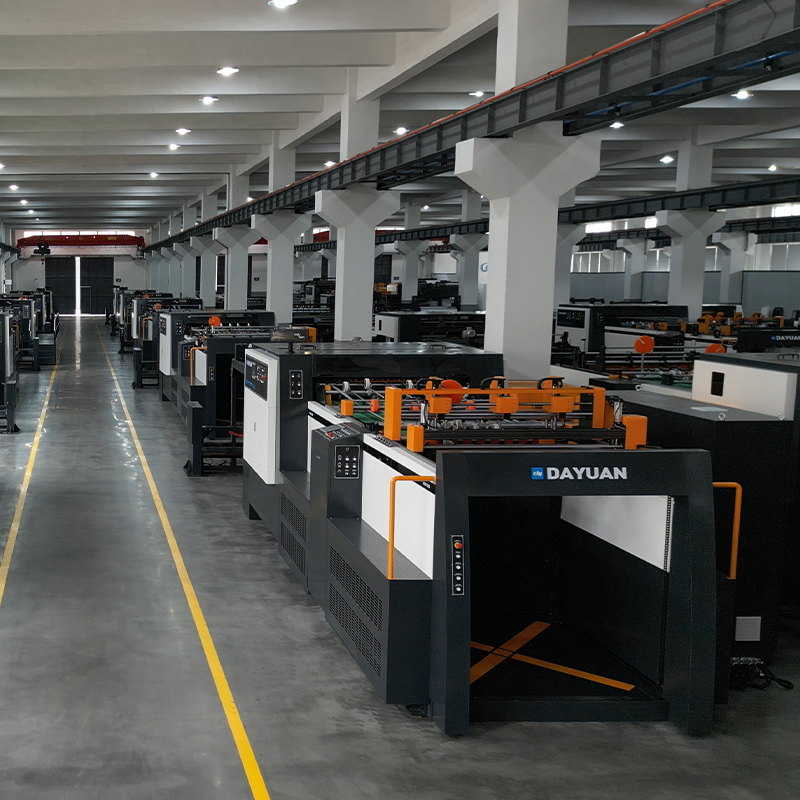
Many operations underestimate how much cutting quality contributes to the overall perception of a finished product. Buyers, distributors, and end users notice misaligned edges, rough cuts, and dimensional inconsistencies immediately — even when everything else in the production chain is flawless. Investing in a high-quality paper cutter machine addresses these issues at the source, giving your team a reliable foundation for consistent, professional-grade output every time.
The Link Between Cutting Precision and Product Perception
Why Edge Quality Defines Product Value
The perceived quality of a printed or packaged product is often judged first by its physical finish, and edges are among the most immediately visible indicators. A clean, square cut signals precision manufacturing, attention to detail, and reliable quality control. Conversely, a slightly torn, rough, or misaligned edge — even by a millimeter — can undermine the perceived value of an otherwise perfectly produced item.
A professional paper cutter machine delivers this edge quality through a combination of blade sharpness, clamping pressure, and mechanical rigidity. These elements work together to ensure that material does not shift, deform, or compress unevenly during the cut. The result is a consistent edge that holds up to physical handling and visual scrutiny alike.
In high-volume commercial environments, even slight inconsistencies across a print run can accumulate into significant quality defects. A reliable paper cutter machine eliminates those inconsistencies by maintaining repeatable cutting parameters across every single sheet or stack, regardless of run length.
Dimensional Accuracy and Its Impact on Downstream Processes
Beyond visual appearance, dimensional accuracy is critical to how cut sheets perform in downstream processing steps such as folding, binding, laminating, or inserting into packaging. If the cut dimensions deviate from specification, even by small tolerances, materials may jam in automated equipment, fold incorrectly, or fail to align in multi-part assembly.
A high-performance paper cutter machine supports dimensional accuracy through precision-engineered backstops, programmable cut sequences, and stable material feeding systems. These features ensure that each cut is made at exactly the right position, eliminating the need for manual correction or rework.
When your cutting dimensions are reliable, your entire production workflow runs more smoothly. Fewer errors mean less downtime for corrections, less material waste, and more consistent output that meets customer specifications without exception.
How a Professional Paper Cutter Machine Reduces Defects
Eliminating Blade-Related Damage
One of the most common sources of cut-related defects in lower-grade operations is blade performance. A dull, improperly tensioned, or misaligned blade drags through material rather than slicing cleanly, producing frayed edges, micro-tears, and surface marking. These defects are especially visible on coated stocks, heavy cardboards, and laminated materials where surface integrity is paramount.
Professional-grade paper cutter machine designs incorporate hardened steel blades with optimized cutting angles that are engineered to maintain sharpness over extended use cycles. Blade replacement and alignment protocols are simplified in professional models, ensuring that operators can maintain peak cutting performance without complex technical intervention.
By minimizing blade-induced surface damage, a quality paper cutter machine preserves the integrity of printed inks, coatings, foils, and specialty surfaces — protecting the visual impact of your finished product all the way through to delivery.
Clamping Pressure and Stack Control
Clamping is a function that many operators overlook, yet it is equally as important as the cutting blade itself. Inadequate clamping allows material stacks to shift during the cut stroke, which introduces angular deviation and uneven edge profiles. This is particularly damaging when processing large stacks of lightweight or slippery papers.
Professional paper cutter machine systems apply programmable or hydraulic clamping pressure that is calibrated to the material type and stack height. This ensures that the entire stack is held firmly and uniformly in place from the moment the cut begins to the moment it is completed.
Consistent stack control translates directly into more uniform sheet edges across every item in the batch. For print shops, packaging producers, and commercial finishers, this level of consistency is what separates professional-grade output from commodity production.
Workflow Efficiency and Quality Consistency at Scale
Programmable Cut Sequences for Repeatable Results
In modern production environments, quality consistency is inseparable from workflow repeatability. A paper cutter machine equipped with programmable memory functions allows operators to store and recall cut sequences for recurring jobs. This eliminates manual measurement errors, reduces setup time, and ensures that every run of the same job is cut to identical specifications.
This programmability is especially valuable in print-on-demand and short-run environments where jobs change frequently. Instead of recalibrating manually for each order, operators simply recall the correct program and begin production immediately — maintaining quality standards without sacrificing throughput speed.
The ability to document and reproduce cut parameters also supports quality management systems and certification requirements, providing a verifiable record that production standards were followed consistently across every job.
Reducing Material Waste Through Precision Cutting
Inaccurate cutting leads directly to material waste, which has both financial and environmental implications. When a paper cutter machine produces cuts that are out of specification, the affected sheets must either be reworked or discarded. In high-volume operations, even small per-unit waste rates accumulate into significant material costs over time.
Professional cutting equipment minimizes waste by ensuring that every cut lands exactly where it is intended. Accurate backstop positioning, stable clamping, and reliable blade performance all work together to deliver cuts that meet specification the first time — eliminating the rework cycle that drives up both material costs and labor hours.
For businesses managing tight margins in competitive print and packaging markets, the waste reduction benefits of a high-quality paper cutter machine contribute directly to improved profitability without any reduction in output quality.
Material Versatility and Application Range
Handling Diverse Paper and Board Grades
The range of materials processed in a typical print or packaging facility is broad — from thin tissue and offset papers to thick cartonboard, coated stocks, and laminated sheets. A professional paper cutter machine is designed to handle this full spectrum of material types without requiring extensive manual adjustment or operator skill variation.
Variable cutting force settings, adjustable blade angles, and versatile clamping configurations allow the machine to adapt to different material thicknesses and surface characteristics. This versatility ensures that quality standards are maintained regardless of which substrate is being processed, making the machine a reliable centerpiece of a multi-product production workflow.
When a single paper cutter machine can be confidently deployed across your full product range, you reduce equipment investment, simplify operator training, and maintain consistent quality standards throughout your entire catalog.
Supporting Specialty Finishing and High-Value Applications
High-value products — such as premium packaging, luxury stationery, high-resolution photography prints, and financial documents — demand cutting precision that goes beyond basic functional requirements. The slightest deviation in edge quality on these items is immediately apparent and commercially damaging.
A professional paper cutter machine designed for precision applications provides the mechanical stability, blade quality, and control systems needed to meet these elevated standards. Micro-adjustment capabilities, anti-vibration construction, and high-resolution backstop positioning ensure that even the most demanding specialty applications are handled with the accuracy they require.
By deploying a cutting solution capable of serving your most demanding jobs, you create a production environment where quality is never the limiting factor — regardless of the complexity or value of the work on your floor.
FAQ
What types of materials can a professional paper cutter machine handle?
A professional paper cutter machine is typically designed to process a wide range of substrates including standard printing papers, coated and uncoated stocks, cartonboard, laminated sheets, and specialty finishing materials. The machine's adaptability depends on its blade configuration, clamping system, and cutting force range, which professional models offer in adjustable formats to support diverse material types.
How does cutting precision affect downstream production steps?
When a paper cutter machine delivers dimensionally accurate cuts, downstream processes such as folding, binding, laminating, and packaging assembly operate far more smoothly. Inaccurate cuts can cause misalignment in automated equipment, poor fold registration, and assembly failures — all of which generate rework, waste, and delays. Precision cutting at the source prevents these cascading quality problems.
How often should the blade on a paper cutter machine be replaced or sharpened?
Blade maintenance frequency depends on material type, stack height, and production volume. In general, a paper cutter machine blade should be inspected regularly for edge degradation, particularly when processing coated, laminated, or abrasive materials that accelerate wear. Professional machines are designed for straightforward blade replacement with minimal downtime, ensuring that peak cutting performance is restored quickly when needed.
Can a paper cutter machine improve productivity as well as quality?
Yes — a professional paper cutter machine improves both. Programmable cut sequences reduce setup time, consistent precision reduces rework, and reliable clamping and blade systems reduce downtime from errors. The combination of quality and efficiency means that production runs complete faster, with fewer interruptions, and at a consistently high standard that reduces the total cost of quality management across your operation.