 EN
EN

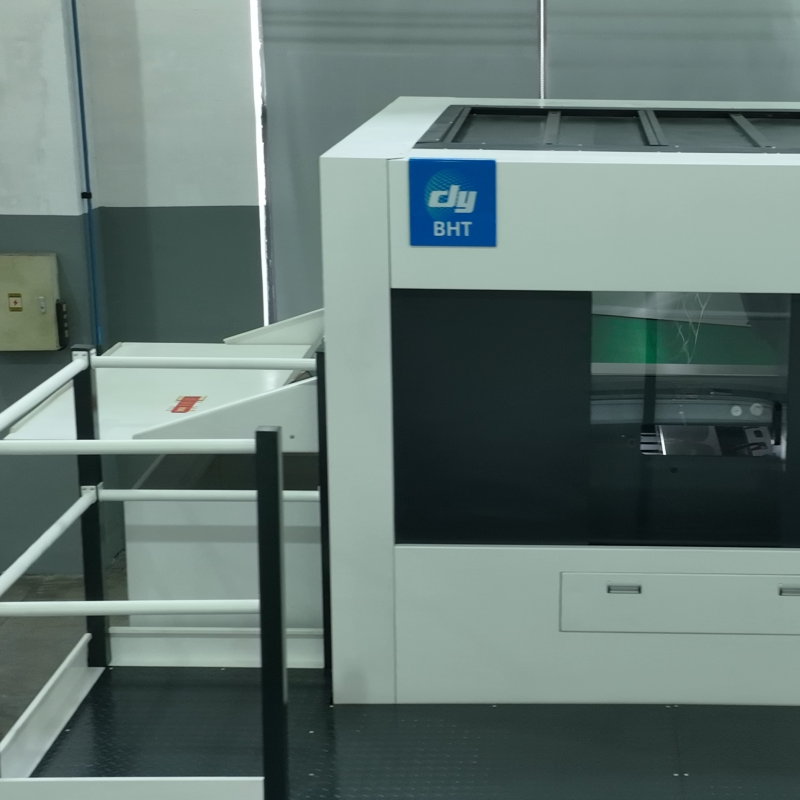
Selecting the right hot foil stamping machine is one of the most consequential decisions a print finishing operation can make, particularly when the production workload involves intricate, multi-element foil designs. Complex foil work — think layered metallic patterns, fine-line typography, overlapping foil zones, and tight-tolerance embossed detail — demands far more from your equipment than standard single-pass foiling jobs. A machine that excels at simple flat foil application can fail dramatically when faced with the precision, heat management, pressure consistency, and foil indexing demands that complex designs impose. Making the wrong choice leads to wasted foil, misregistered artwork, production downtime, and rejected jobs that erode client trust and margins alike.
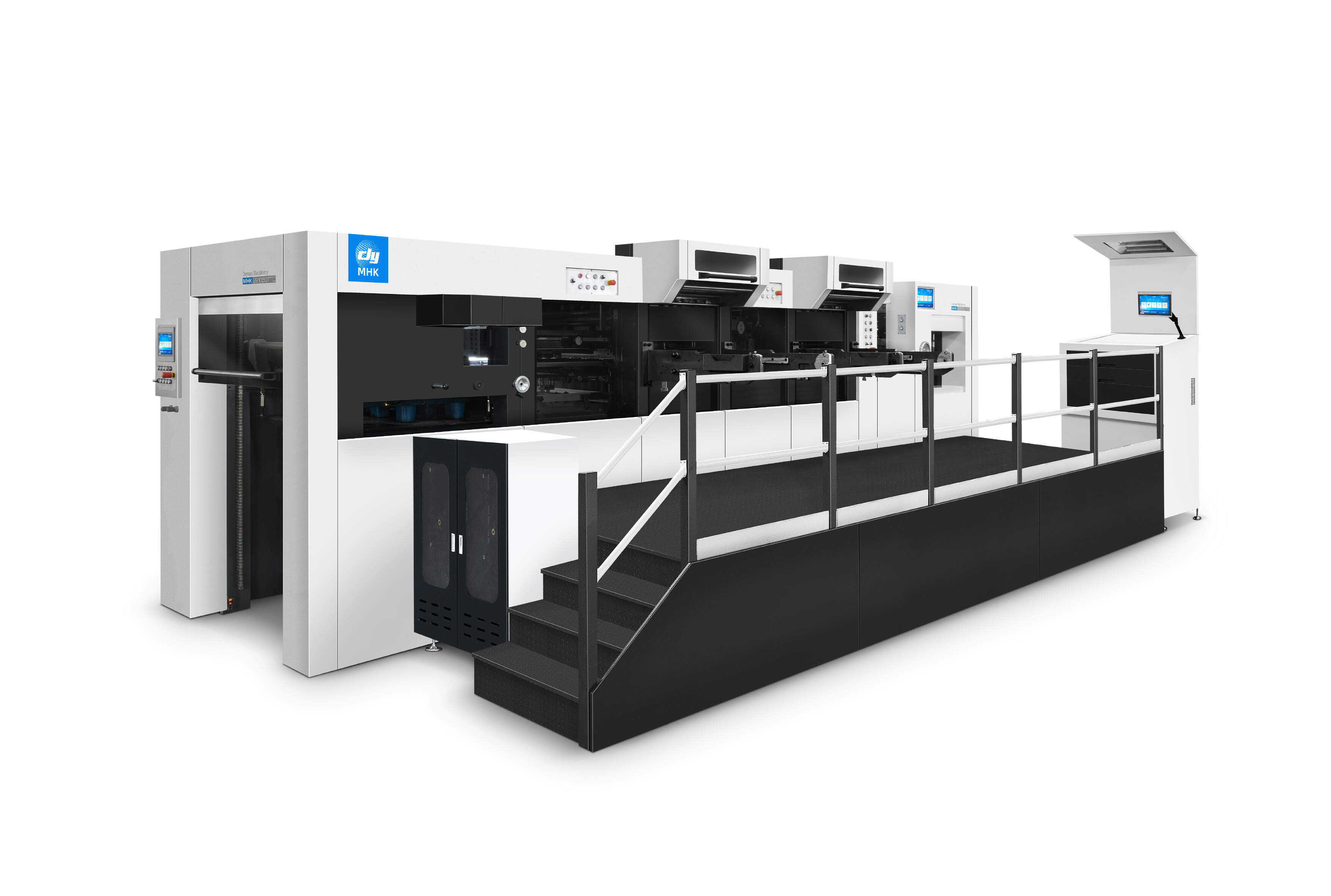
The good news is that modern engineering has produced a generation of hot foil stamping machine platforms specifically designed to handle complexity at speed. These machines combine servo-driven foil indexing, precision platen control, advanced temperature zoning, and high-accuracy sheet registration to achieve results that were difficult or impossible even a decade ago. But knowing which features to prioritize — and understanding how each technical parameter translates to real-world complex design performance — requires a structured evaluation approach. This guide walks you through exactly that decision-making process so you can choose a machine that matches not just your current job mix, but your most demanding design ambitions.
Understanding What Makes Foil Designs Complex
The Key Characteristics of Difficult Foil Work
Before evaluating any hot foil stamping machine, it is essential to define what complexity actually means in the context of foil design. Not all challenging jobs are identical. Some complexity arises from fine-line detail — intricate borders, micro-text, or hairline rules that require a die and machine capable of resolving extremely tight tolerances. Other complexity comes from large flood foil areas that must be applied without blistering, bubbling, or cold spots caused by uneven heat distribution across the platen surface.
Multi-foil designs add yet another dimension of difficulty. These jobs require precise sequential registration of two or more foil colors or finishes, with each pass needing to align perfectly to the previous one. Any drift in sheet registration between foiling stations results in visible misalignment that renders the job unsellable. A capable hot foil stamping machine must handle all of these scenarios reliably, not just on the first sheet but consistently across large production runs.
Substrate characteristics also contribute to complexity. Soft or uncoated stock, heavily embossed surfaces, board with high moisture variation, or substrates with unusual thickness profiles all interact differently with foil application heat and pressure. The machine's ability to adapt dynamically to substrate variation — rather than requiring manual recalibration between sheets — directly determines how well it handles the full range of complex design scenarios you're likely to encounter.
Why Standard Machines Struggle with Intricate Designs
Entry-level or general-purpose hot foil stamping machine models often rely on mechanical cam-driven systems that offer limited control over dwell time, pressure curve, and foil advance speed. These fixed-parameter machines work adequately for simple, single-element foil badges or broad coverage areas on consistent stock. However, when the design introduces fine embossed detail alongside a flat foil zone in the same impression, the pressure requirements for each element conflict — and a machine without zone-level control cannot satisfy both simultaneously.
Temperature uniformity is another critical differentiator. A hot foil stamping machine that maintains a single-zone platen temperature may achieve adequate adhesion across simple shapes, but complex designs often include both delicate thin-foil elements and robust coverage blocks within the same die. Without multi-zone thermal control, the machine operator faces an impossible compromise: set the temperature for the fine detail and risk cold spots on the broader area, or set it for flood coverage and risk burning the fine lines.
Critical Machine Features for Complex Foil Design Performance
Servo-Driven Foil Feed and Indexing Precision
The foil feed system is arguably the most important mechanical feature to evaluate when choosing a hot foil stamping machine for complex designs. In servo-driven systems, the foil advance distance per impression is programmed digitally and executed with motor encoder feedback, allowing adjustments as fine as fractions of a millimeter. This precision matters enormously in multi-foil work because every micron of misalignment accumulates across a print run and becomes visible in the finished piece.
Servo indexing also enables foil-saving programs that advance the foil only as far as the specific design element requires, reducing waste significantly on jobs with asymmetric or scattered foil patterns. For premium foils — holographic, pearl, or custom-printed foil stocks — this waste reduction translates directly into job profitability. When evaluating a hot foil stamping machine, ask specifically about the minimum programmable foil advance increment and whether the system supports independent foil path control for multi-foil configurations.
Some advanced machines support split-rail foil systems, where different foil rolls run on independent indexed tracks across the same impression width. This architecture is essential for jobs that require two distinct foil finishes applied in a single pass without a second machine cycle. The ability to run split rails efficiently separates production-grade complex foiling platforms from machines that are merely capable of basic multi-foil work with significant setup overhead.
Platen Flatness, Pressure Uniformity, and Multi-Zone Temperature Control
A high-quality hot foil stamping machine designed for complex work will specify platen flatness tolerances in the range of microns, not millimeters. This engineering precision ensures that pressure is distributed uniformly across the entire die surface regardless of design geometry. Uneven pressure creates inconsistent foil transfer — typically visible as patchy adhesion on large coverage areas or broken fine lines in intricate detail zones.
Multi-zone temperature control allows the operator to assign different temperature setpoints to distinct areas of the platen. In practice, this means a fine embossed line on the left side of the design can receive slightly lower heat than a broad metallic coverage block on the right side, enabling each design element to receive the optimal thermal energy for reliable foil transfer. This is a feature that separates professional-grade machines from general-purpose equipment, and it is a non-negotiable consideration for any operation regularly handling complex foil artwork.
The heating system architecture itself matters as well. Machines using cartridge-style heaters embedded within a machined steel platen offer faster heat-up times and more stable temperature maintenance than older oil-bath or single-element systems. When evaluating any hot foil stamping machine, request detailed specifications on temperature uniformity across the platen surface under load — not just the nominal setpoint accuracy.
Sheet Registration and Feed System Accuracy
For multi-pass foil work, sheet registration accuracy at each impression cycle is the foundation of correct design alignment. A hot foil stamping machine equipped with front-lay and side-lay registration systems, combined with precision gripper bars, can achieve repeat accuracy within ±0.1mm or better — a standard that is necessary but not always achieved by budget-segment machines. The gripper system must maintain consistent clamping force across the full sheet width without allowing any lateral movement during the impression stroke.
Automatic sheet thickness compensation is another valuable feature. As substrate thickness varies slightly within a production batch, a machine that auto-adjusts its gripper and feed geometry eliminates a common source of misregistration that manual machines cannot address without stopping the run. For high-end packaging jobs where exact foil-to-print register is visible to the end consumer, this level of precision engineering in the hot foil stamping machine is essential rather than optional.
Evaluating Machine Speed, Die Change Flexibility, and Workflow Integration
Speed Ratings and Their Relationship to Foil Quality
High-speed capability in a hot foil stamping machine is only valuable when the machine can maintain foil transfer quality at elevated sheet rates. Many machines specify a maximum mechanical speed that is achievable only on simple designs with generous foil coverage and optimal substrate. Complex foil work — with its demanding thermal and mechanical tolerances — often requires the machine to operate at a controlled percentage of its rated maximum speed to maintain output quality.
When evaluating speed claims, ask suppliers specifically about the effective production speed on complex multi-foil jobs with fine-line dies, not just the theoretical maximum. A hot foil stamping machine that delivers 7,000 sheets per hour on a simple design but must slow to 3,500 on complex work is a fundamentally different productivity proposition than one that maintains 6,000 across both job types. Understanding real-world throughput profiles is critical to ROI calculations.
Dual-station machines — those capable of performing two foiling operations in a single pass — change the productivity equation significantly for complex multi-foil designs. By combining what would otherwise be two separate machine passes into one automated sequence, these platforms reduce handling time, eliminate inter-pass registration risk, and lower per-unit production cost substantially. For operations with a consistent volume of complex multi-foil work, dual-station architecture in a hot foil stamping machine is a strong efficiency and quality justification.
Die Compatibility, Setup Time, and Format Changeover
Complex designs often require custom magnesium or brass dies that must be mounted, registered, and temperature-stabilized before production begins. The hot foil stamping machine you select should support the full range of die materials you use while offering a quick-change mounting system that minimizes setup time per job. Machines with digital die registration systems — where the operator inputs reference coordinates and the machine guides the fine adjustment — reduce skilled operator dependency and shorten makeready significantly.
Format flexibility is equally important. If your job mix includes both small-format detailed work and large-format packaging sheets, a machine with a wide format range and accessible pressure adjustment across the full format spectrum gives you the versatility to take on diverse complex design projects without investing in multiple platforms. Evaluate the platen size, maximum and minimum sheet dimensions, and the mechanical accessibility of the adjustment controls before committing to a machine platform.
Long-Term Operational Considerations for Complex Foil Production
Maintenance Architecture and Spare Parts Accessibility
A hot foil stamping machine that performs brilliantly on complex designs is only an asset when it is running. Machines with modular subassemblies — where foil feed carriages, platen heaters, and gripper assemblies can be swapped independently — minimize downtime when components require servicing. Evaluate the manufacturer's service network, spare parts lead times, and whether the machine's diagnostic systems can identify faults before they cause production failures.
Remote diagnostics capability, now standard on many modern machines, allows technicians to connect to the machine's control system remotely and diagnose electrical or motion control faults without an on-site visit. For operations running high-value complex foil jobs on tight deadlines, this capability can be the difference between a one-hour fix and a two-day service delay. Include maintenance architecture in your machine evaluation as seriously as you include print quality specifications.
Operator Skill Requirements and Control Interface Usability
Complex foil designs demand precise setup, and the quality of the machine's control interface directly affects how much of that precision is achievable in practice. A hot foil stamping machine with a modern touchscreen HMI that displays real-time temperature maps, foil advance parameters, sheet counts, and pressure profiles in one integrated view reduces the cognitive load on operators and makes it easier to replicate exact settings across repeat jobs. Job recipe storage — where all parameters for a specific design are saved and recalled in seconds — is particularly valuable for operations running recurring complex foil work.
Operator training requirements should also factor into your decision. Highly automated machines with guided setup workflows can be operated effectively with shorter training cycles, which matters when skilled hot foil operators are difficult to recruit. Conversely, machines that require deep mechanical intuition to set up correctly for complex jobs introduce production variability that shows up as quality inconsistency. The ideal hot foil stamping machine for complex designs pairs sophisticated mechanical capability with an interface that translates that capability into consistent, repeatable operator performance.
FAQ
What is the most important feature to look for in a hot foil stamping machine for complex designs?
Precision foil indexing through a servo-driven feed system is arguably the most critical feature, as it directly controls foil registration accuracy across multi-element designs. Combined with multi-zone temperature control and platen flatness specifications, these three features define whether a hot foil stamping machine can consistently deliver quality results on intricate foil artwork.
Can a single-station hot foil stamping machine handle multi-foil complex designs?
A single-station hot foil stamping machine can handle multi-foil designs through multiple passes, but this approach introduces additional registration risk and increases production time per unit. Dual-station machines are strongly preferred for operations with consistent multi-foil workloads because they apply both foil elements in one pass, eliminating inter-pass misalignment and improving throughput significantly.
How does substrate type affect the choice of hot foil stamping machine for complex work?
Substrate variation — including surface texture, thickness consistency, and coating type — affects heat absorption and pressure response during foil transfer. A hot foil stamping machine with automatic thickness compensation, adjustable pressure curves, and fine temperature zoning handles diverse substrate types far more reliably than machines with fixed mechanical parameters. Always test your most difficult substrates during machine evaluation rather than relying solely on manufacturer specifications.
What production speed should I expect from a hot foil stamping machine on complex foil jobs?
Effective production speed on complex foil designs is typically 40–70% of the machine's stated maximum speed, depending on design complexity, substrate, and foil type. When evaluating a hot foil stamping machine, request real-world speed data on comparable job types rather than relying on peak mechanical ratings. A machine delivering consistent quality at 5,000 sheets per hour on complex work is more valuable than one rated at 9,000 but requiring quality compromises above 4,000 on intricate designs.
Table of Contents
- Understanding What Makes Foil Designs Complex
- Critical Machine Features for Complex Foil Design Performance
- Evaluating Machine Speed, Die Change Flexibility, and Workflow Integration
- Long-Term Operational Considerations for Complex Foil Production
-
FAQ
- What is the most important feature to look for in a hot foil stamping machine for complex designs?
- Can a single-station hot foil stamping machine handle multi-foil complex designs?
- How does substrate type affect the choice of hot foil stamping machine for complex work?
- What production speed should I expect from a hot foil stamping machine on complex foil jobs?