 EN
EN

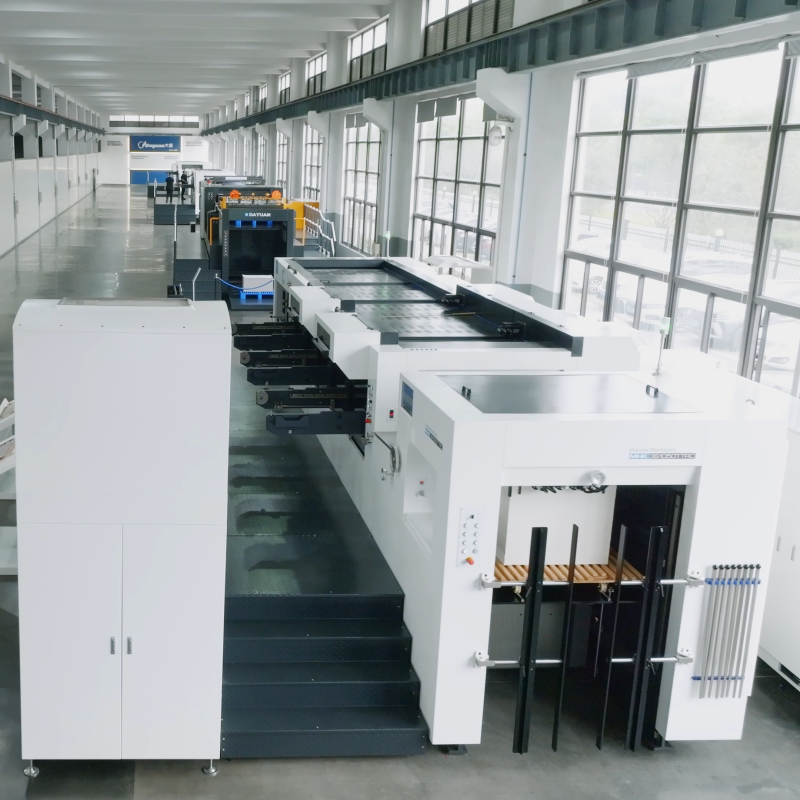
In the world of packaging, printing, and industrial manufacturing, the margin between a flawless finished product and a costly reject often comes down to fractions of a millimeter. A professional die cutting machine is expected to deliver consistent, repeatable accuracy across thousands of cycles without deviation. When that precision falters, the consequences ripple through every stage of production — from material waste and rework costs to delayed shipments and damaged client relationships.
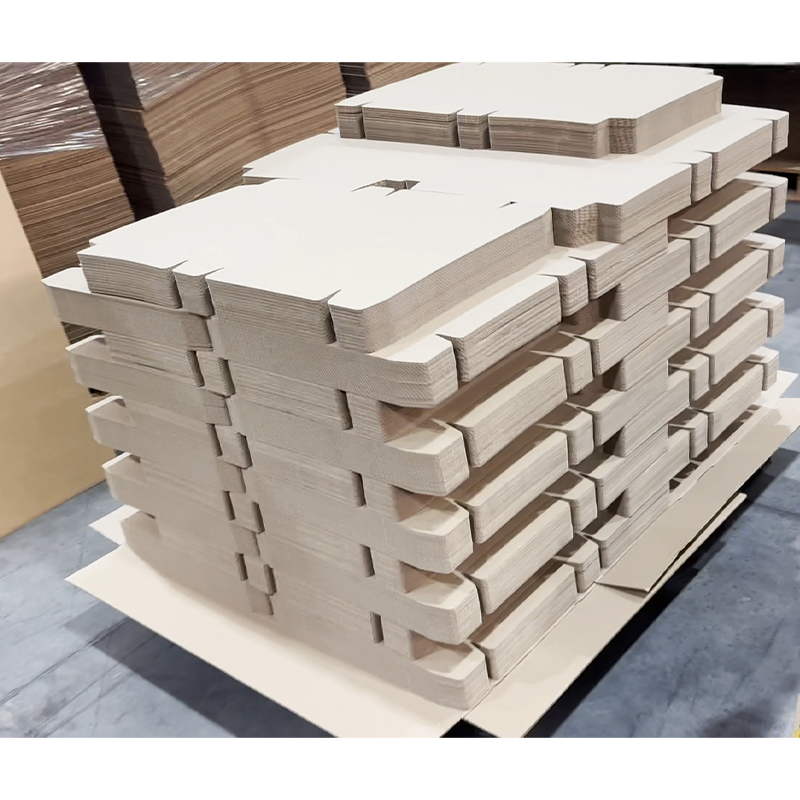
Precision is not simply a desirable feature in a die cutting machine — it is the foundational requirement that determines whether the machine can perform its core function reliably. Every other capability, whether speed, automation level, or material compatibility, depends on the machine's ability to cut, crease, and form with exact dimensional accuracy. Understanding why precision holds this central position helps manufacturers, packaging engineers, and procurement teams make better decisions about equipment selection, maintenance, and operational standards.
The Role of Precision in Die Cutting Machine Performance
Dimensional Accuracy and Product Consistency
A die cutting machine is tasked with transforming flat sheets of paperboard, corrugated material, or specialty substrates into precisely shaped components. These components must meet exact dimensional specifications so they can be assembled, filled, or stacked without misalignment. Even a deviation of 0.2 to 0.3 millimeters in cut position can cause a folding carton to fail its gluing stage or a retail box to close improperly.
Dimensional accuracy in a die cutting machine is not a one-time achievement — it must be maintained across an entire production run. As the machine cycles through thousands of sheets, mechanical wear, temperature changes, and substrate variation all introduce forces that can shift registration. A machine engineered for high precision incorporates compensation mechanisms that actively counteract these forces, keeping output within tolerance throughout the run.
For B2B buyers, consistent dimensional accuracy translates directly into predictable downstream processes. When every cut blank arrives at the folder-gluer or assembly line within specification, throughput increases and manual inspection requirements decrease. The die cutting machine effectively becomes a quality anchor for the entire production workflow.
Registration Precision and Multi-Layer Alignment
Many packaging applications require the die cutting machine to align its cutting action precisely with pre-printed graphics, embossed areas, or previously applied coatings. This is known as registration precision, and it is one of the most technically demanding aspects of die cutting performance. If the cut does not align with the printed design, the finished product may show visible misregistration — a defect that is immediately apparent to end consumers and unacceptable to brand owners.
High-precision die cutting machines achieve tight registration through a combination of accurate sheet feeding, robust mechanical clamping, and fine adjustment systems that allow operators to correct position in real time. The feeding system must deliver each sheet to the cutting station at exactly the same position, cycle after cycle. Any variation in feed position directly translates into registration error at the cut.
In applications such as luxury cosmetic packaging, pharmaceutical cartons, or high-end retail boxes, registration tolerances are often specified at ±0.1 millimeter or tighter. Only a die cutting machine built with precision as a core design priority can consistently meet these requirements at production speeds.
How Precision Affects Material Utilization and Waste Reduction
Optimizing Sheet Layout and Nesting Efficiency
Substrate materials — whether coated paperboard, corrugated board, or specialty films — represent a significant portion of total production cost. The die cutting machine's ability to cut accurately directly determines how efficiently those materials are used. When a die cutting machine holds tight positional accuracy, designers can nest cut shapes more closely together on the sheet, reducing the amount of waste skeleton material generated per cycle.
Conversely, when a die cutting machine exhibits positional drift or inconsistent registration, safety margins must be built into the sheet layout to prevent cut shapes from overlapping or falling outside specification. These wider margins consume more material per part, increasing cost per unit and reducing the number of parts that can be extracted from each sheet.
Over a production run of hundreds of thousands of sheets, even a small improvement in material utilization driven by better die cutting machine precision can generate substantial cost savings. This is why precision is not just a quality metric — it is a direct driver of production economics.
Reducing Rejects and Rework Costs
Every reject generated by an imprecise die cutting machine carries a cost that extends beyond the value of the wasted material. Rejected blanks must be identified, removed from the production stream, and either reworked or scrapped. The labor involved in inspection and sorting, combined with the disruption to downstream processes, adds up quickly in high-volume environments.
A die cutting machine that maintains precision under production conditions minimizes the reject rate at the source. Rather than relying on downstream quality control to catch dimensional errors, the machine itself prevents those errors from occurring. This shift from reactive quality management to proactive precision control is a hallmark of professional-grade die cutting equipment.
For operations running multiple shifts or producing to tight delivery schedules, the ability of the die cutting machine to sustain low reject rates without constant operator intervention is a critical operational advantage. It reduces the burden on quality teams and allows production managers to plan output with greater confidence.
Precision Engineering in the Mechanical Design of a Die Cutting Machine
Frame Rigidity and Structural Stability
The precision of a die cutting machine begins with its mechanical foundation. The machine frame must be rigid enough to resist the substantial forces generated during the cutting stroke without flexing or vibrating. Any deflection in the frame translates directly into variation in the cutting pressure applied across the die, which in turn causes inconsistent cut depth and dimensional variation in the finished blanks.
Professional die cutting machines are typically constructed with heavy cast iron or welded steel frames that are precision-machined after assembly to ensure flatness and parallelism of all critical surfaces. The platens that hold the cutting die and the counter plate must remain parallel to within very tight tolerances throughout the cutting stroke, even as cutting forces vary with different die layouts and substrate thicknesses.
Frame rigidity also contributes to the long-term stability of the die cutting machine. A machine that maintains its structural geometry over years of operation will continue to deliver consistent precision without requiring frequent realignment or major mechanical intervention. This durability is a key factor in the total cost of ownership calculation for industrial buyers.
Drive System Accuracy and Repeatability
The drive system of a die cutting machine governs the motion of the cutting platen and the sheet feeding mechanism. Precision in the drive system means that each cutting stroke follows exactly the same path and applies exactly the same force, cycle after cycle. Any variation in stroke geometry or force application introduces inconsistency into the cut quality.
Modern professional die cutting machines use precision-ground crankshafts, hardened guide columns, and servo-controlled feeding systems to achieve the repeatability required for demanding applications. The feeding system in particular must deliver sheets with sub-millimeter positional accuracy at high cycle rates, which requires careful engineering of the gripper bar mechanism, the feed board geometry, and the sheet separation system.
The interaction between the drive system and the control electronics is also critical. A die cutting machine equipped with advanced motion control can compensate for mechanical variables in real time, maintaining precision even as operating conditions change. This integration of mechanical and electronic precision engineering is what separates professional-grade equipment from lower-specification alternatives.
Precision Requirements Across Different Die Cutting Machine Applications
Folding Carton and Retail Packaging
Folding carton production is one of the most demanding applications for a die cutting machine in terms of precision requirements. Cartons must be cut and creased to exact dimensions so that they fold cleanly, glue accurately, and erect to the correct finished shape. Crease lines must be positioned precisely relative to cut edges so that fold angles are consistent and the assembled carton presents a professional appearance.
In retail packaging, the visual impact of the finished carton is directly tied to the precision of the die cutting machine that produced it. Misaligned cuts, inconsistent crease depths, or dimensional variation between cartons in the same batch are all visible quality defects that reflect poorly on the brand. High-precision die cutting is therefore not just a production requirement — it is a brand quality requirement.
The die cutting machine must also handle a wide range of paperboard grades and thicknesses with consistent precision. As substrate properties vary, the machine's ability to maintain cut quality without operator adjustment is a measure of its engineering sophistication and the robustness of its precision systems.
Pharmaceutical and Technical Packaging
Pharmaceutical packaging imposes some of the strictest dimensional tolerances of any die cutting machine application. Cartons for blister packs, vials, and medical devices must meet regulatory dimensional specifications and must function reliably in automated filling and packaging lines. A die cutting machine producing pharmaceutical cartons must deliver consistent precision across every blank in a production run, with no tolerance for dimensional drift.
Technical packaging applications, such as electronic component trays, precision instrument cases, and industrial part packaging, similarly demand high die cutting machine precision. These applications often involve complex die layouts with multiple cut and crease operations that must all be executed with exact positional accuracy relative to each other.
In both pharmaceutical and technical packaging, the die cutting machine's precision directly affects the safety and functionality of the end product. This elevates precision from a production quality metric to a product integrity requirement, reinforcing its status as the most critical factor in professional die cutting machine performance.
FAQ
What level of precision should a professional die cutting machine maintain?
A professional die cutting machine should maintain positional accuracy and registration precision within ±0.1 to ±0.3 millimeters depending on the application. Demanding applications such as pharmaceutical packaging or luxury retail cartons typically require the tighter end of this range. The machine should sustain this precision consistently across the full production run, not just at the start of a job.
How does die cutting machine precision affect downstream production processes?
When a die cutting machine delivers consistent dimensional accuracy, downstream processes such as folder-gluers, filling lines, and assembly stations can operate at higher efficiency with fewer stoppages for adjustment or reject removal. Imprecise die cutting creates dimensional variation that propagates through the entire production chain, increasing labor costs, reducing throughput, and elevating the risk of finished product defects.
What mechanical factors most directly influence die cutting machine precision?
Frame rigidity, platen parallelism, drive system repeatability, and sheet feeding accuracy are the primary mechanical factors that determine die cutting machine precision. The quality of the machine's construction, the precision of its machined components, and the sophistication of its motion control systems all contribute to its ability to maintain tight tolerances under production conditions.
Can a die cutting machine maintain precision over long production runs?
A well-engineered die cutting machine is designed to maintain precision throughout extended production runs by incorporating robust mechanical components, effective lubrication systems, and thermal compensation features. Regular preventive maintenance, including die condition monitoring, platen parallelism checks, and feeding system calibration, is essential to sustaining precision performance over the machine's operational life.
Table of Contents
- The Role of Precision in Die Cutting Machine Performance
- How Precision Affects Material Utilization and Waste Reduction
- Precision Engineering in the Mechanical Design of a Die Cutting Machine
- Precision Requirements Across Different Die Cutting Machine Applications
-
FAQ
- What level of precision should a professional die cutting machine maintain?
- How does die cutting machine precision affect downstream production processes?
- What mechanical factors most directly influence die cutting machine precision?
- Can a die cutting machine maintain precision over long production runs?